Here’s the plot, as the internet tells it: Bill Gates and the Rockefellers want fewer people on the planet, they’ve been working on it for a hundred years, and vaccines, family planning and a fake pandemic are how they’re doing it.
Here’s the awkward part. Some of that is in the archives. The Rockefellers really did fund eugenics research, including at a Nazi-era institute in Berlin. A Rockefeller really did found the most influential population-control organization of the twentieth century, and its first leader really was a prominent American eugenicist. The U.S. government really did study world population growth as a national security problem, in a memo that was classified for years. Bill Gates really did stand on a TED stage and say the world’s population number could come down by 10 or 15 percent. And governments really did sterilize hundreds of thousands of people who never agreed to it.
What’s not in the archives is the part the meme needs most: a plan to kill people who are already alive, a vaccine built to sterilize, or a hundred-year Gates and Rockefeller extermination program. So let’s separate the two, piece by piece, with receipts.
Keep one rule handy, because it does most of the work: a wish is not a weapon. Wanting fewer births, writing a memo about fewer births, even funding programs aimed at fewer births, is not the same thing as having the power to make it happen. And it’s definitely not the same thing as killing anyone. Where wishes did turn into weapons, it was usually a government, and the victims were real. Those cases are part of this story too, and none of them need a conspiracy to be horrifying.
First, Words Mean Things
Half of this fight is people using the same word for five different things. “Depopulation” sounds like one idea. It isn’t.
- Depopulation means an actual drop in the number of people living somewhere. Fewer people next year than this year.
- Slower growth means the population is still going up, just not as fast, or not as high as an earlier projection said it would.
- Stabilization means growth is heading toward zero.
- Fertility reduction means fewer births per woman, on average. It says nothing about killing anyone.
- Population control means deliberate efforts to change how many people there are, or who they are.
- Eugenics means trying to shape who gets born, by encouraging some people to have children and discouraging or stopping others. Historically it ran on racism, ableism and force.
- Family planning means helping people decide whether, when and how many children to have.
Watch how a quote slides between these. When Bill Gates talks about lowering a projected 9 billion, he’s talking about the second one: a future number that hasn’t happened yet. When a meme repeats it, it becomes the first one, with the people currently alive as the target. Same sentence, completely different crime.
One more piece of math that clears up a lot: population change is births, minus deaths, plus people moving in. That’s it. You can shrink a future population by having fewer babies, by people moving away, or by people dying. Every serious population program in this story aimed at the first one. That doesn’t make all of them innocent. It does mean “fewer births” and “mass murder” are different accusations, and they need different evidence.
Where the Idea Came From
The Gates and Rockefeller story doesn’t start with Gates or Rockefeller. It starts with an English clergyman doing math in 1798.
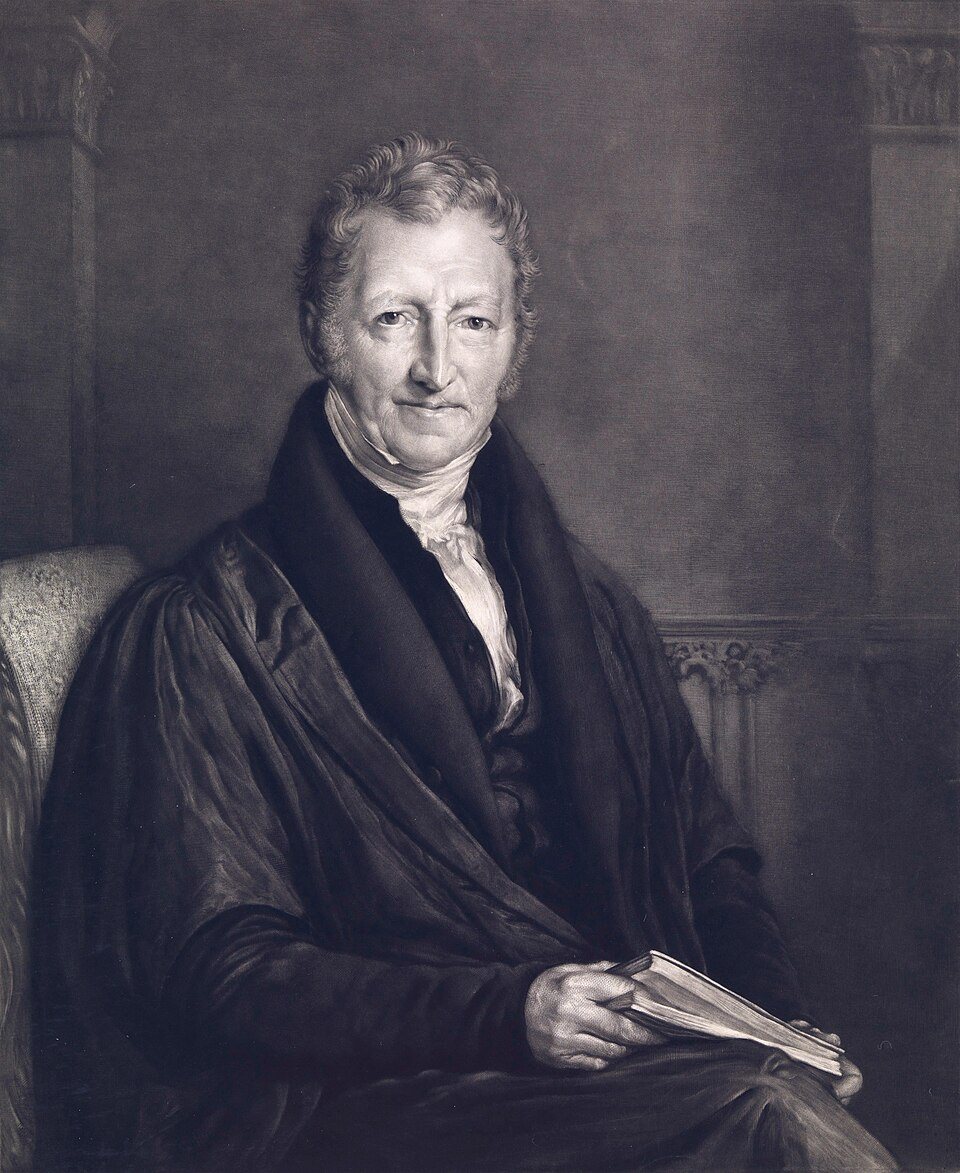
Thomas Malthus argued in An Essay on the Principle of Population that people multiply faster than food does, so hunger, disease and misery would always push numbers back down. It was a gloomy, influential idea, and it was wrong in the way that matters most: farming changed. Crop yields, fertilizer and transport blew past his limits. But the frame stuck. For two centuries, every “too many people” argument has borrowed his basic shape: a growing crowd, a fixed pie, and somebody deciding who should get less.
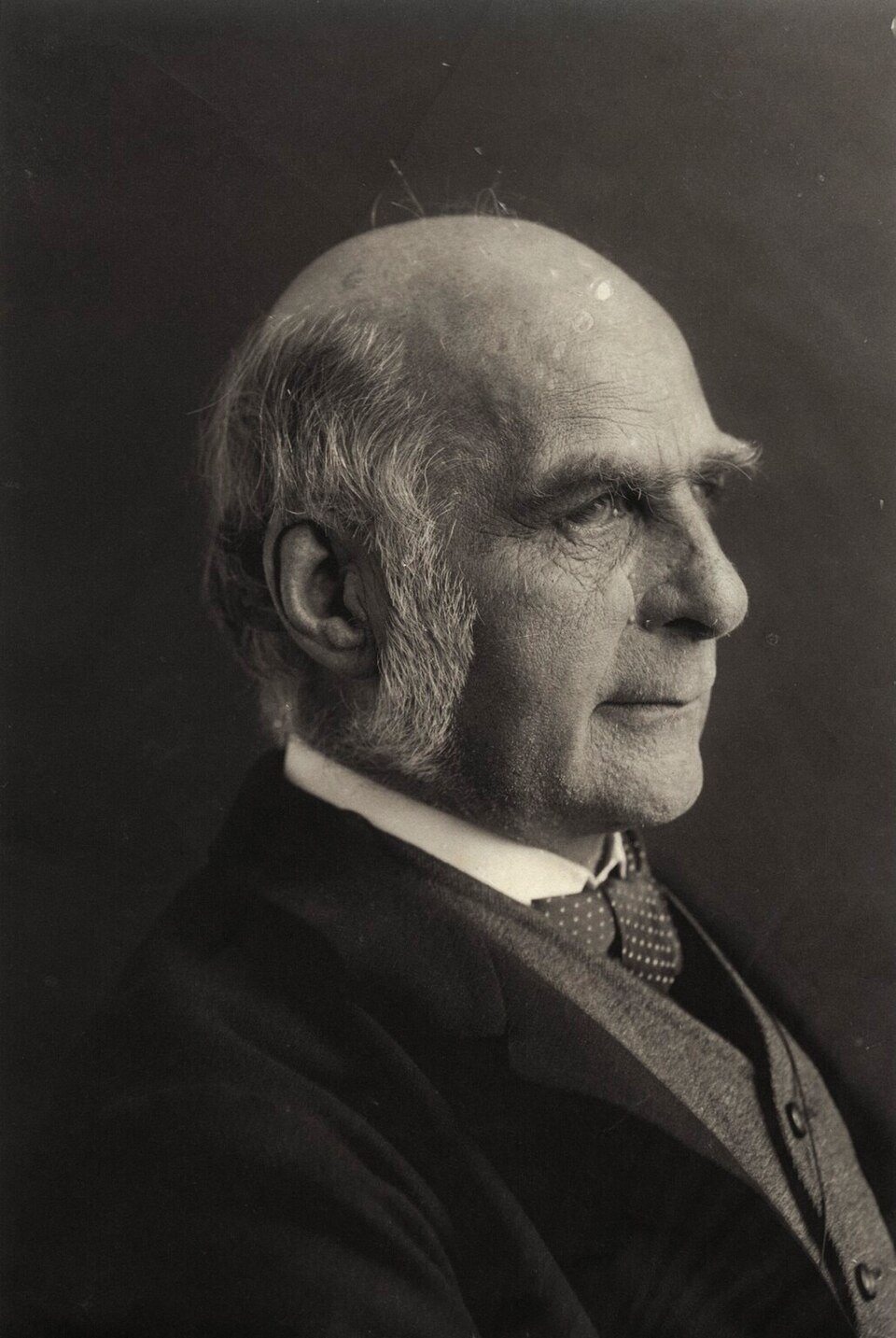
The next turn was worse. In 1883, the British scientist Francis Galton coined the word eugenics. Malthus had worried about how many people. Galton and his followers cared about which people. Encourage the “fit” to have more children, stop the “unfit” from having any.
That second half became law. In the early 1900s, American states passed sterilization laws aimed at people labeled “feebleminded,” poor, disabled, criminal or simply inconvenient, and those labels landed hardest on poor women, disabled people, immigrants, and Black and Native Americans. In 1927 the Supreme Court approved it. In Buck v. Bell, Justice Oliver Wendell Holmes upheld Virginia’s sterilization of a young woman named Carrie Buck, writing “Three generations of imbeciles are enough.” Carrie Buck wasn’t an imbecile. She had been raped, became pregnant, and was committed by the family she’d been placed with. The vote was 8 to 1.1

So when people say population control has an ugly history, they’re right. It does. The real question is narrower: who did what, when, and with what power.
The Rockefeller File
Start by un-blobbing the name. “The Rockefellers” in these memes means at least seven different things: John D. Rockefeller Jr.; his son John D. Rockefeller III; his other son David Rockefeller, the banker; Nelson Rockefeller, who became vice president; the Rockefeller Foundation; the Rockefeller Brothers Fund; and Rockefeller University. Add the Population Council, which a Rockefeller founded and which then ran itself. These are different people and institutions that sometimes agreed, sometimes argued, and were never one command center. Treating them as one person is how a grant in 1932 becomes a vaccine in 2021.
Now the receipts.
The Money That Went to Eugenics
The Rockefeller Foundation funded reproductive and hereditary research in the 1920s and 1930s, including in Germany. Its own institutional history, kept by the Rockefeller Archive Center, records funding twin research at the Kaiser Wilhelm Institute for Anthropology, Human Heredity and Eugenics in Berlin from roughly 1932 to 1935. That institute was a center of the racial science the Nazi state leaned on. The Foundation reports ending its remaining German programs by 1938.2

That’s real, and it’s bad. It’s also a funding record, not a command. Money to an institute in the early 1930s documents a relationship with that institute. It doesn’t, by itself, show that the Foundation directed what the Nazi regime later did, or meant to enable it. Both things can be true: the funding was a moral failure, and it isn’t proof of a plan.
Junior, Sanger and Birth Control
Rockefeller archival histories describe John D. Rockefeller Jr. supporting Margaret Sanger’s birth-control work by 1924.2 Why he did it is the interesting question, and it’s not settled by a meme. Resource worries, poverty, social reform, heredity and class assumptions were all floating around birth-control advocacy in that era, often in the same room. Sanger herself worked with eugenicists and used their language at times, and also fought for women’s ability to decide for themselves. The honest version holds both. The original correspondence is where the motives live, and it’s in the archive, not in an infographic.
John D. Rockefeller III and the Population Council
This is the strongest real link in the whole story. In 1952 John D. Rockefeller III founded the Population Council, and its first administrator was Frederick Osborn, one of the most prominent eugenicists in the country.23

So yes: a Rockefeller built the century’s most important population organization, and put a eugenicist in charge of it. JDR3 had been backing studies of fertility and population growth in Asia since 1948, and he spent the rest of his life pushing population stabilization through research and policy advocacy. Rockefeller money supported family-planning work abroad, including in India, during the 1950s and 1960s.24
Here’s what the meme leaves out. The Rockefeller archives also describe Foundation trustees who were reluctant to get directly involved in population control, which is part of why JDR3 built a separate organization to do it.2 That’s not the behavior of a single family moving in lockstep. And the Council’s work moved over the decades from eugenics-era thinking toward demographic research and reproductive health. You can argue about how complete that shift was, and historians do. But “the institution changed, unevenly” is what the record shows. “The plan never changed” is what the meme assumes.
The Cold War Piece
The part of the Rockefeller story most people skip is the most revealing. In the 1950s and 1960s, a lot of powerful Americans, in philanthropy and in government, treated fast population growth in poor countries as a threat: to economic development, to political stability, and to the fight against communism. Lower birth rates were pitched as a way to get all three.4 That’s not a secret plot. It was said out loud, in reports and speeches. It’s also not humanitarian in any simple sense. When a foreign policy goal is “fewer babies over there,” the people over there become a variable, and that’s exactly where the abuses later in this story came from.
The Government Memo Everyone Quotes
If you’ve spent time in depopulation corners of the internet, you’ve seen “NSSM 200” waved around like a confession. It’s a real document. It’s just not the confession people think it is.
On April 24, 1974, the Nixon White House ordered National Security Study Memorandum 200: a study of how world population growth would affect U.S. security and overseas interests.5 The study pulled in the State Department, Defense, the CIA, Agriculture and the foreign aid agency. Its December 1974 report, Implications of Worldwide Population Growth for U.S. Security and Overseas Interests, worried about access to resources, food supplies, trade, economic development and political stability in fast-growing countries.6 In November 1975, President Ford’s National Security Decision Memorandum 314 adopted policy guidance based on it.7

So it’s true: the U.S. government formally treated other countries’ birth rates as an American national security issue. That’s worth being uncomfortable about. A superpower deciding that poorer nations’ family sizes are its business is a power move, whatever language it comes wrapped in.
But follow the chain, because the meme skips every link. There’s the request (April 1974). There’s the study (December 1974). There are its recommendations. There’s the policy directive that adopted some of them (1975). Then there are budgets, actual programs, decisions by the governments of the countries involved, and finally whatever happened on the ground. Each of those is a separate step, and each needs its own evidence. A study that considered strategies is not a record of what was done.
And NSSM 200 can’t carry every sterilization abuse in the world on its back. India’s Emergency, China’s birth limits and Peru’s sterilization drive were run by those countries’ own governments, under their own laws and politics. Where U.S. money or pressure was involved in a specific case, that’s a case-specific finding someone has to show. “NSSM 200 exists” doesn’t show it.
Where It Actually Got Ugly
Here’s the part the conspiracy version gets backwards. It invents a secret extermination plot and then, half the time, waves away the real, documented abuses as “the same kind of thing.” They aren’t the same kind of thing. The real ones have names, dates, victims and paperwork.
The United States, through the 1970s. Eugenic sterilization laws ran for decades, and more than 60,000 Americans were sterilized under them. In 1976 the General Accounting Office investigated the Indian Health Service and contracted hospitals. In just four of the agency’s twelve areas, it counted 3,406 sterilizations between 1973 and 1976 and found consent procedures that didn’t meet the rules.81 Advocates have long argued the real scale was larger. The confirmed findings and the broader estimates are different numbers, and both matter.
India, 1975 to 1977. During the Emergency, when Indira Gandhi’s government suspended normal democratic limits, sterilization targets were pushed down through officials to clinics and camps. Millions of sterilizations were performed in a single year, with pressure, quotas and outright force. The backlash helped throw her government out in the 1977 election.9

China, from around 1980. The one-child policy followed earlier campaigns for later, longer, fewer births. Enforcement ran through fines, lost jobs, required IUDs, sterilizations and abortions, some of them compulsory, and it varied a lot by place and by family, with exemptions for rural families and minorities in many areas.10
Peru, the 1990s. Under Alberto Fujimori’s government, a national family-planning drive with sterilization targets performed hundreds of thousands of sterilizations, overwhelmingly on poor, rural and Indigenous women. Many have testified they were pressured, misled, or never really asked. It has been the subject of official investigations and court cases for decades.11
Romania, 1966 to 1989. This one runs the other direction, which is the point. Nicolae Ceaușescu wanted more Romanians, so Decree 770 banned most abortions and contraception was restricted. Births jumped at first. Then came unsafe illegal abortions, women dying from them, and children abandoned into state orphanages.12
Look at what these have in common, because it’s a better warning system than any meme:
- Numerical targets and quotas
- Bonuses or pressure on the people doing the procedures
- Consent that was missing, rushed or meaningless
- Aiming at the poor, the disabled, minorities and Indigenous people
- Weak oversight, and nobody to complain to
- No real alternatives offered
- An institution’s goal treated as more important than the person on the table
Every one of these was carried out by a government with legal power over the people it hurt. That’s the uncomfortable truth the plot story distracts from: the dangerous version of population control doesn’t need a secret billionaire cabal. It needs a state with a target and nobody checking it.
What Bill Gates Actually Said

The quote that launched a thousand videos comes from a February 2010 TED talk called Innovating to Zero! It’s a talk about climate. Gates is trying to get carbon emissions to zero, and he writes up an equation: carbon dioxide equals people, times services per person, times energy per service, times carbon per unit of energy. To get the total to zero, one of those numbers has to hit zero, and he spends most of the talk on the last one, clean energy.13
On the first term, people, he says the world has about 6.8 billion people, headed up to about nine billion, and that with a great job on new vaccines, health care and reproductive health services, “we could lower that by, perhaps, 10 or 15 percent.”1314
“That” is the nine billion. The projection. A number for the future that hasn’t happened. He’s saying the world might end up with fewer future people than the forecast, not that 10 to 15 percent of the people alive in 2010 should go. Watch the whole thing and it isn’t close.
Here’s why vaccines are in that sentence, and it’s the part people find counterintuitive. Gates laid out his reasoning in his 2009 annual letter, and he and Melinda Gates returned to it in 2014: when more children survive, parents tend to choose to have fewer of them.1516 If you’re not sure your kids will live to adulthood, you have more. When you’re sure, families get smaller. That pattern, called the demographic transition, is real, but it isn’t a law of physics. Child survival, education, cities, contraception, women’s work, the cost of housing and a dozen other things all push on it together. Vaccines don’t lower fertility by doing anything to anyone’s body. They lower it, if they do, by letting parents stop planning for funerals.
You can still disagree with Gates. Plenty of people have good reasons to. A billionaire talking about how many people the planet should have is a fair thing to side-eye, whatever his motive. But “he said he’d like fewer future births through healthier kids and voluntary contraception” and “he said he wants to kill 15 percent of us” are different sentences, and only one of them is on the tape.
The Money

The Gates Foundation openly funds global health, vaccines, family planning and reproductive health. Its grants are in a public database, including grants to the Population Council.173 That’s a real, documented link between the Gates and Rockefeller-founded worlds. The way to investigate it isn’t to stare at the logo. It’s to read each grant: what it paid for, how much, where, who ran it, what consent rules applied, and whether anyone evaluated it independently.
The influence question is where critics have the strongest ground. A peer-reviewed 2025 analysis estimated the Gates Foundation gave the World Health Organization about $4 billion from 2010 to 2023, roughly 9.5 percent of its revenue.18 Money that size, much of it earmarked for specific programs, can shape what a global health agency works on. It doesn’t give Gates a vote. The WHO is governed by its member states.19 “Private money can bend public priorities” is a serious argument. “Gates controls the WHO” is a slogan.
Same with farming. In 2006 the Gates and Rockefeller foundations jointly launched AGRA, an agricultural development push in Africa.20 Critics have raised real concerns about dependence on commercial seed and fertilizer and about outsiders setting Africa’s farming priorities. That’s a fight about agriculture and power. It’s evidence the two foundations work together on farming. It isn’t evidence of a depopulation objective, and pretending it is drowns out the people making the actual argument.
The Good Club and Lock Step
Two more exhibits show up in every depopulation thread.

The secret billionaire meeting. In May 2009, a group of very rich people met privately at Rockefeller University in New York. Contemporary reports named Bill Gates, David Rockefeller, Warren Buffett, George Soros, Oprah Winfrey, Michael Bloomberg and Ted Turner among them. Population growth was reportedly among the topics, and the press nicknamed the group “the Good Club.”2122
That happened. It’s also about as far as the evidence goes. The meeting was private and there’s no public transcript, so nobody outside the room knows exactly what was said. What we know is that rich people talked about philanthropy, and population came up. That’s a reason to want transparency from billionaires who shape global policy with private money. It’s not a record of an agreement to eliminate anyone, and nothing in the record shows one.
The pandemic “plan.” In 2010 the Rockefeller Foundation and the Global Business Network published Scenarios for the Future of Technology and International Development, with four imagined futures. One, called Lock Step, pictured a pandemic followed by tighter government control, travel restrictions and surveillance.23
Scenario planning is a standard exercise. Companies, militaries and governments do it all the time: imagine several futures, ask how you’d handle each. A pandemic was an obvious one to imagine, because public health people had been warning about one for decades. Writing “what if there’s a pandemic and governments overreact” in 2010 and then seeing a pandemic in 2020 is a lucky guess about a likely event, not a blueprint. If predicting something proved you caused it, every hurricane forecaster would be in prison.
How the Claims Rate
Here’s every major claim, graded. Documented means the record supports it. Real, but Twisted means something true is underneath, stretched past what it shows. Not Supported means the evidence just isn’t there.
The Scorecard 15 claims
Rockefeller philanthropies funded eugenics-related research, including a Nazi-era institute in Berlin.
The Rockefeller Foundation’s own archival history records funding twin research at the Kaiser Wilhelm Institute for Anthropology, Human Heredity and Eugenics from about 1932 to 1935, and says its German programs ended by 1938. It’s a funding record, not proof the Foundation directed what the Nazi state did.2
John D. Rockefeller III founded the Population Council, and a eugenicist ran it first.
JDR3 founded the Population Council in 1952 and Frederick Osborn, a leading American eugenicist, became its first administrator.2
The U.S. government treated world population growth as a national security issue.
Governments carried out coercive sterilization.
Bill Gates wants slower population growth.
Gates and David Rockefeller attended a private meeting where population came up.
Lock Step was a 2010 pandemic scenario from a Rockefeller-funded report.
It’s real and it’s a hypothetical, one of four imagined futures.23
The Gates Foundation controls the WHO.
Gates funds the Population Council, so he’s continuing the Rockefeller plan.
There are Gates grants to the Population Council in the public database. Overlapping funding isn’t shared intent. Read each grant’s purpose before deciding what it shows.17
All family planning is eugenics.
Eugenics is about who gets to reproduce, enforced from above. Family planning can be voluntary help, or it can be coercion with a nicer name. The difference is targeting and consent, and you have to check every program.
Modern programs always respect informed consent.
The flip side matters too. Nobody has shown that every current program gets consent right, and the history says you check rather than trust. That takes program-by-program investigation.24
Gates said he wants to kill 10 to 15 percent of the world.
In context he was talking about lowering a projected future population of about 9 billion through health care and reproductive services.13
Vaccines are designed to sterilize people or kill off populations.
No credible evidence presented supports it. The documented link between vaccines and smaller families runs through parents choosing fewer children when more of their children survive.15
Lock Step proves COVID-19 was planned.
A hypothetical scenario that resembles later events isn’t evidence anyone caused them.23
Gates and the Rockefellers are running a continuous extermination program.
Nothing in the record shows one. What the record shows is a long, messy history of philanthropy, eugenics, Cold War policy and government abuses, with different actors, different goals and plenty of disagreement.
It Runs Both Ways
Here’s what almost nobody arguing about depopulation notices: the same power that can push people to have fewer children can push them to have more. And the push for more is having a moment.
| Pushing for Fewer Births | Pushing for More Births |
|---|---|
| Campaigns for smaller families | Campaigns for bigger families |
| Access to contraception | Access to fertility treatment and childcare |
| Rewards for having fewer children | Rewards for having more children |
| Penalties for extra children | Penalties for having none |
| Birth limits, forced sterilization | Bans on contraception or abortion, forced pregnancy |
| Fear of running out of resources | Fear of running out of workers and caregivers |
Read across each row. Same tool, opposite direction. The top rows help people do what they already want. The bottom rows force them.
Romania is the cautionary tale from the last century. China is the one from this one. After decades of birth limits, China moved to a two-child policy in 2016 and a three-child policy in 2021, then started adding incentives to have kids. Births didn’t snap back. Housing costs, the price of education, jobs, gender expectations and the simple fact that people had gotten used to smaller families all got a vote.10
South Korea tried the opposite direction from the start, pouring money into family support, and still hit a total fertility rate of 0.72 in 2023, the lowest in the world. The OECD’s analysis keeps pointing to the same things: the clash between work and family, housing, education costs and gender inequality.25
That’s the most underrated fact in this whole debate. Governments with real power, real money and real will, in both directions, keep failing to get the birth rate they want. Which is a decent hint about how much a foundation can do without any of those powers. A wish is not a weapon, and sometimes not even a state’s wish is.
The fix for both versions was written down a long time ago. At the 1994 International Conference on Population and Development in Cairo, the world’s governments agreed that population programs should rest on reproductive rights, and rejected coercion and quotas for providers.24 In 1998 the U.S. added the Tiahrt Amendment, safeguards for American-funded family planning abroad that bar targets and quotas and require people to get real information. Rules existing doesn’t prove everyone follows them. But it tells you what to check.
UNFPA’s 2025 State of World Population report went looking for the real fertility problem and found something nobody’s selling as a conspiracy: lots of people can’t have the families they want. In its survey, the barriers people named included money (39 percent), job insecurity (21 percent) and housing (19 percent).26 Nobody planned that. It’s just the bill. And it’s a reminder that you can lose control over your own family without any villain at all.
The Numbers
One last reality check, because “depopulation” implies the population is going down. It isn’t.
Three Words People Mix Up
The United Nations’ 2024 World Population Prospects put the world at about 8.2 billion people in 2024, and projects growth to continue until it peaks around 10.3 billion in the mid-2080s, then eases to about 10.2 billion by 2100. Global fertility fell from 3.31 births per woman in 1990 to 2.25 in 2024.27
So the world is still growing, just more slowly than it used to. That’s slower growth, not depopulation. And because of population momentum, all the young people already alive who will have kids of their own, the total keeps climbing for decades even as families get smaller. Those projections are conditional, not destiny. But nothing in them looks like a plan to get rid of anybody.
How to Test the Next One
There will be a next one. When it shows up in your feed, run it through these.
- IntentWhat goal was actually stated, by whom, and when? Read the whole quote.
- PlanningIs there a strategy someone acted on, or is it a scenario, a prediction or a conversation?
- FundingHow much money was promised, spent and received, and for what stated purpose?
- AuthorityWhat legal, contractual or practical power did this person or group actually have?
- ImplementationWhat happened on the ground, and who carried it out?
- ConsentWere people told the truth, able to say no, and offered real alternatives?
- CausationWhat separates the effect of this program from everything else that changes birth rates?
- CoordinationIs there proof these people knowingly pursued the same goal, beyond showing up in the same room or funding the same group?
And when you’re looking at an actual policy, ask where it sits on this ladder. The same ladder works whether the policy wants more babies or fewer.
Your Choice
- 1Information. Accurate counseling that doesn't steer you.
- 2Access. Affordable contraception, fertility care or childcare.
- 3Persuasion. Campaigns urging smaller or bigger families.
- 4Incentives. Money or tax breaks tied to your choice.
- 5Structural pressure. Conditions that make the other choice hard.
- 6Conditional access. Benefits you need depend on your reproductive choice.
- 7Legal compulsion. Birth limits, penalties, bans.
- 8Physical coercion. Forced sterilization, forced abortion, forced pregnancy.
Their Choice
A cash incentive can be harmless or coercive depending on who’s offered it, how desperate they are, how big it is and whether they understood what they agreed to. Offering a procedure someone wants is different from pressuring someone into one. The rungs at the top are about choices. The rungs at the bottom are about taking them away.
The Short Version
One line per claim, ready to paste into a comment section. Every line is sourced in the scorecard.
How the Claims Rate
- Rockefeller philanthropies funded eugenics-related research, including twin research at a Berlin eugenics institute from about 1932 to 1935. That’s a funding record, not a command.
- John D. Rockefeller III founded the Population Council in 1952, with eugenicist Frederick Osborn as its first administrator.
- The U.S. formally studied world population growth as a security issue in NSSM 200 (1974) and adopted guidance in NSDM 314 (1975).
- Governments, including the U.S., India, China and Peru, carried out coercive sterilizations. Responsibility differs by case.
- Bill Gates has said publicly he wants slower population growth, through child survival and voluntary reproductive health care.
- Gates and David Rockefeller were among billionaires at a private May 2009 meeting where population growth was reportedly discussed.
- Lock Step was one of four hypothetical futures in a 2010 Rockefeller Foundation scenario report.
- The Gates Foundation is a major WHO funder and can steer priorities, but member states govern the WHO.
- Gates grants to the Population Council exist, but shared funding isn’t shared intent. Each grant has a stated purpose to check.
- Family planning isn’t automatically eugenics. The difference is targeting and consent, program by program.
- It’s not established that every modern family-planning program respects informed consent. That needs checking program by program.
- Gates did not say he wants to kill 10 to 15 percent of people. He was talking about a projected future population.
- No credible evidence shows vaccines are designed to sterilize or eliminate populations.
- A 2010 pandemic scenario doesn’t prove COVID-19 was planned.
- No evidence shows a continuous Gates and Rockefeller extermination program.
So Who Gets to Decide?
Strip out the memes and the question underneath is real, and it’s old. Who gets a say in whether you have children?
Governments have looked at birth rates and seen future workers, taxpayers and soldiers. Companies see workers and customers. Environmental groups see pressure on the planet. Some religious movements see a duty to have big families. Philanthropists see a development variable on a chart. Each of them has, at some point, wanted to nudge your family size, and some of them had the power to do much worse than nudge.
The people with the clearest claim to the answer are the ones having the children, or not. That’s the line that matters, whether the pressure is for fewer births or more of them. The Rockefellers funded things they should be ashamed of. Governments sterilized people who never agreed. Bill Gates has more influence over global health than any one unelected person probably should. All of that is on the record, and none of it needs a secret extermination plot to be worth your anger.
The real story isn’t that someone has a secret plan to make fewer of us. It’s that plenty of people have openly wanted to decide how many of us there should be, and the only reliable protection, every time, has been individual people keeping the right to decide for themselves. A wish is not a weapon. Consent is what keeps it that way.
Sources
- Buck v. Bell, 274 U.S. 200 (1927), Justia U.S. Supreme Court Center
- Rockefeller Archive Center, Rockefeller Philanthropy and Population-Related Fields
- Population Council
- Population and Development Review, history of the global population-control movement
- Office of the Historian, U.S. Department of State, National Security Study Memorandum 200, April 24, 1974 (FRUS 1969 to 1976, Vol. E-14, Part 1, Doc. 113)
- Office of the Historian, U.S. Department of State, Implications of Worldwide Population Growth for U.S. Security and Overseas Interests, December 1974 (FRUS, Doc. 118)
- Office of the Historian, U.S. Department of State, National Security Decision Memorandum 314, November 1975 (FRUS, Doc. 122)
- U.S. General Accounting Office, Investigation of Allegations Concerning Indian Health Service (HRD-77-3), 1976
- Encyclopaedia Britannica, Emergency (India, 1975 to 1977)
- Encyclopaedia Britannica, One-Child Policy
- Wikipedia, Forced Sterilization in Peru (overview with links to the official investigations and court records)
- Wikipedia, Decree 770 (Romania, 1966), overview with demographic and medical sources
- Bill Gates, Innovating to Zero!, TED2010, full transcript
- Bill Gates, Innovating to Zero!, TED2010, video
- Bill Gates, 2009 Annual Letter, Gates Foundation
- Bill and Melinda Gates, 2014 Annual Letter, Gates Foundation
- Gates Foundation, Committed Grants database
- BMJ Global Health (2025), study of Gates Foundation funding to the World Health Organization
- World Health Organization, Governance
- AGRA (Alliance for a Green Revolution in Africa)
- The Guardian, Billionaire Club in Bid to Curb Overpopulation, May 31, 2009
- ABC News, Billionaires Meet Privately in New York, May 2009
- The Rockefeller Foundation, Innovating for a Bold Future (on the 2010 scenario report)
- United Nations, Programme of Action of the International Conference on Population and Development, Cairo, 1994
- OECD Family Database
- UNFPA, State of World Population 2025: The Real Fertility Crisis
- United Nations, World Population Prospects 2024
Image Credits
- Thomas Robert Malthus, whose 1798 Essay on the Principle of Population set the terms of the overpopulation argument. John Linnell · CC BY 4.0 · Wikimedia Commons
- Francis Galton, who coined the word eugenics in 1883, photographed in the 1890s. Eveleen Myers (née Tennant) · Public domain · Wikimedia Commons
- Carrie Buck and her mother, Emma, at the Virginia Colony for Epileptics and Feebleminded in 1924, before Buck v. Bell. Arthur Estabrook · Public domain · Wikimedia Commons
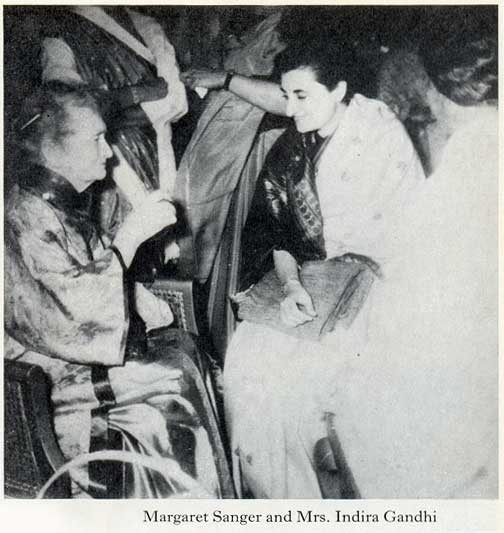
- Margaret Sanger and Indira Gandhi at the Third International Conference on Planned Parenthood, 1952. Unknown photographer · Public domain · Wikimedia Commons
- John D. Rockefeller III chairs a press conference of the federal Commission on Population Growth and the American Future, with Graciela Olivarez, Charles F. Westoff and Christian N. Ramsey Jr. Thomas J. O'Halloran · Public domain · Wikimedia Commons
- Ihnestrasse 22 in Berlin-Dahlem, once the Kaiser Wilhelm Institute for Anthropology, Human Heredity and Eugenics, now part of the Free University of Berlin. User:Torinberl · CC BY-SA 3.0 · Wikimedia Commons
- A 1982 Chinese poster promoting the one-child family. Robert Schediwy · CC BY-SA 3.0 · Wikimedia Commons
- President Gerald Ford with Secretary of State Henry Kissinger and Vice President Nelson Rockefeller. Photo by David Hume Kennerly. David Hume Kennerly · Public domain · Wikimedia Commons
- Rockefeller University in Manhattan, where the private May 2009 philanthropists' meeting was held. Rafael Viñoly Architects · CC BY-SA 2.5 · Wikimedia Commons
- The Gates Foundation headquarters in Seattle. Adbar · CC BY-SA 3.0 · Wikimedia Commons
- Bill Gates in 2017. Kuhlmann / MSC · CC BY 3.0 de · Wikimedia Commons