Why the Book Came Back
On January 22, 2017, two days into Donald Trump’s first term, a White House adviser defended a false statement about the size of the inauguration crowd by calling it one of several alternative facts. Within days, sales of Nineteen Eighty-Four jumped and the novel reached the top of Amazon’s bestseller list. Readers reached for a book published in June 1949 because it is the best-known story in English about a government that decides what is true.
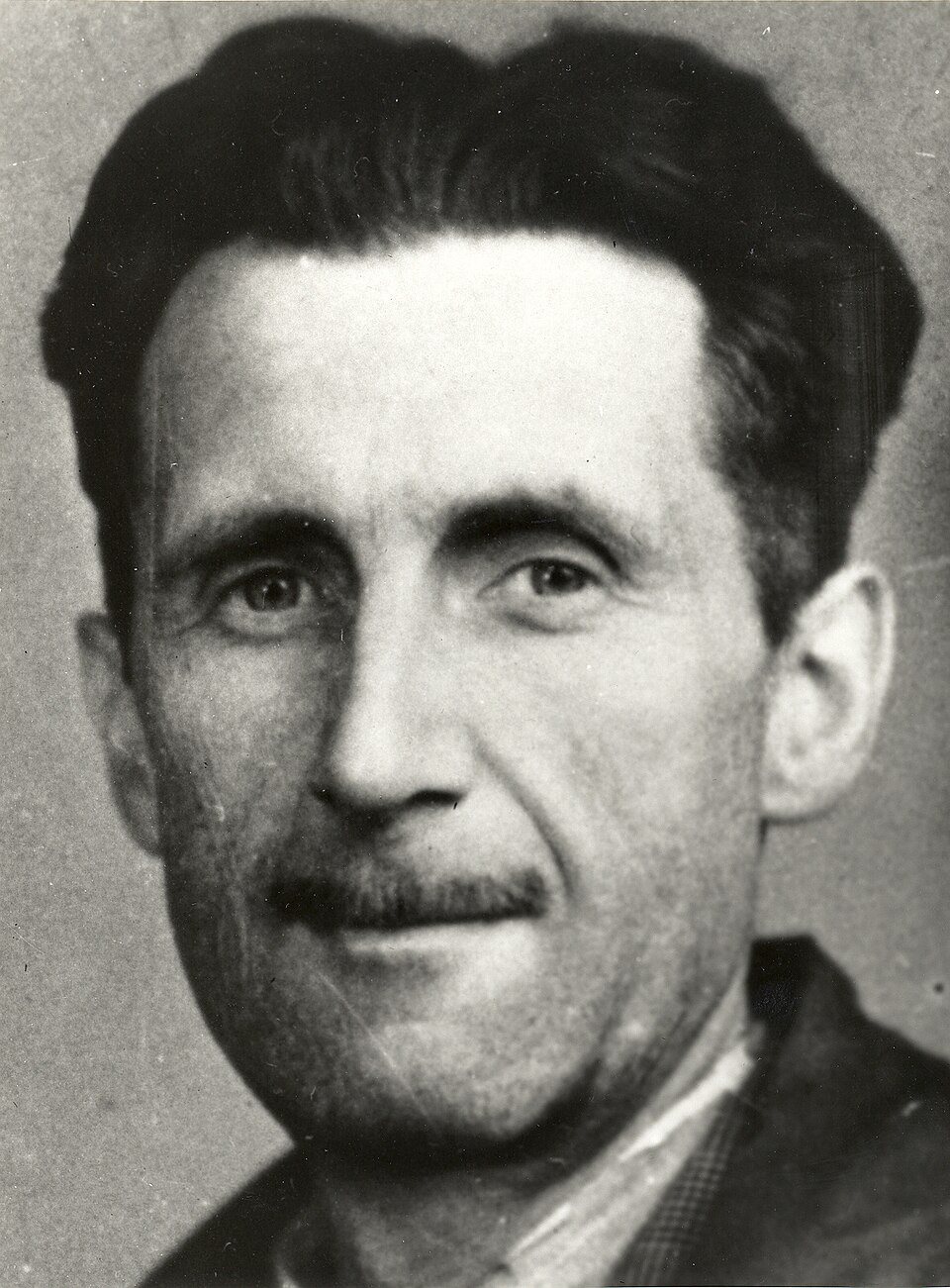
The novel was written by George Orwell, a democratic socialist who had fought fascism in Spain and been hunted there by Soviet-backed communists. Its hero, Winston Smith, works at the Ministry of Truth, rewriting old newspapers so the record always agrees with the Party. The book gave English its words for the machinery: Big Brother, the Thought Police, doublethink, Newspeak, the memory hole.
The comparison to MAGA politics is made often and loosely. A fair test takes one of Orwell’s concepts at a time, explains it from the novel, and sets beside it what is documented in the United States, with dates and sources. Where the record matches, it says so. Where the United States still has what Oceania lacks, courts that rule against the president, elections he can lose, a press that answers back, and crowds that march, it says that too.
Reject the Evidence of Your Eyes and Ears
“The media lies about everything, so you can’t trust what you see.”
Check the specific claim. In January 2017 the White House called the inauguration crowd the largest ever; the photographs said otherwise, and the claim was never corrected. In 2019 federal weather officials were pressed to back a hand-altered hurricane map. A source that names its evidence can be checked. One that tells you to ignore yours cannot.
Winston’s sharpest insight about the Party comes in one line: “The Party told you to reject the evidence of your eyes and ears. It was their final, most essential command.” In Oceania the Party does not need everyone to believe each lie. It needs them to stop trusting their own perception, so that only the Party can settle what happened.
On July 24, 2018, speaking to the Veterans of Foreign Wars in Kansas City, President Trump told the audience: “What you’re seeing and what you’re reading is not what’s happening.” He was talking about coverage of his tariffs. The line was close enough to Orwell’s that it was quoted beside the novel for years. The inauguration crowd dispute of January 2017 had the same shape: photographs showed the crowd, and the White House said the photographs were the problem.
The pattern recurred with a hurricane map in 2019, when a forecast map was altered by hand to include Alabama after the president had said Alabama was at risk, and federal weather officials were pressed to back him rather than their own forecasters. In each case the dispute was small. What made it Orwellian was not the size of the error but the demand that the official version outrank what anyone could check.
Newspeak: Shrinking the Words
Orwell’s appendix to the novel explains that Newspeak was designed not to extend thought but “to diminish the range of thought,” by cutting words until certain ideas could not be said. He had made the argument in plain prose three years earlier in Politics and the English Language, where he wrote that political language is designed “to make lies sound truthful and murder respectable.”
The American version is not a new dictionary. It is lists and names. Federal agencies in 2025 circulated lists of words to flag or remove from grants, websites, and documents. The Gulf of Mexico became the Gulf of America by executive order on January 20, 2025; the Department of Defense was given the secondary title Department of War in September 2025; Lake Ontario was ordered renamed Lake America in August 2026. Renaming a place is ordinary politics. Requiring every federal map and document to use the new name, and shutting a news agency out of events because it would not, is control of vocabulary.
Both parties name things to win arguments. Orwell’s test was narrower: whether a word is chosen to describe a thing or to stop people from describing it.
The Memory Hole: Whoever Controls the Past
“They’re just removing woke propaganda and restoring real history.”
Judge the specific removal. In June 2026 a federal judge ordered National Park exhibits restored, finding the removals were meant to rewrite history “with a white-out pen.” In February 2025 another judge ordered CDC and FDA pages restored for doctors who relied on them. Adding context is history. Deleting the record is the memory hole.
Winston’s office has a slot in the wall for documents marked for destruction. Workers call these slots memory holes. The Party’s slogan explains why they matter: “Who controls the past controls the future: who controls the present controls the past.” Orwell had written the fear down six years before the novel, in an essay on the Spanish war: a world in which, if the Leader says of an event that “It never happened,” then it never happened.
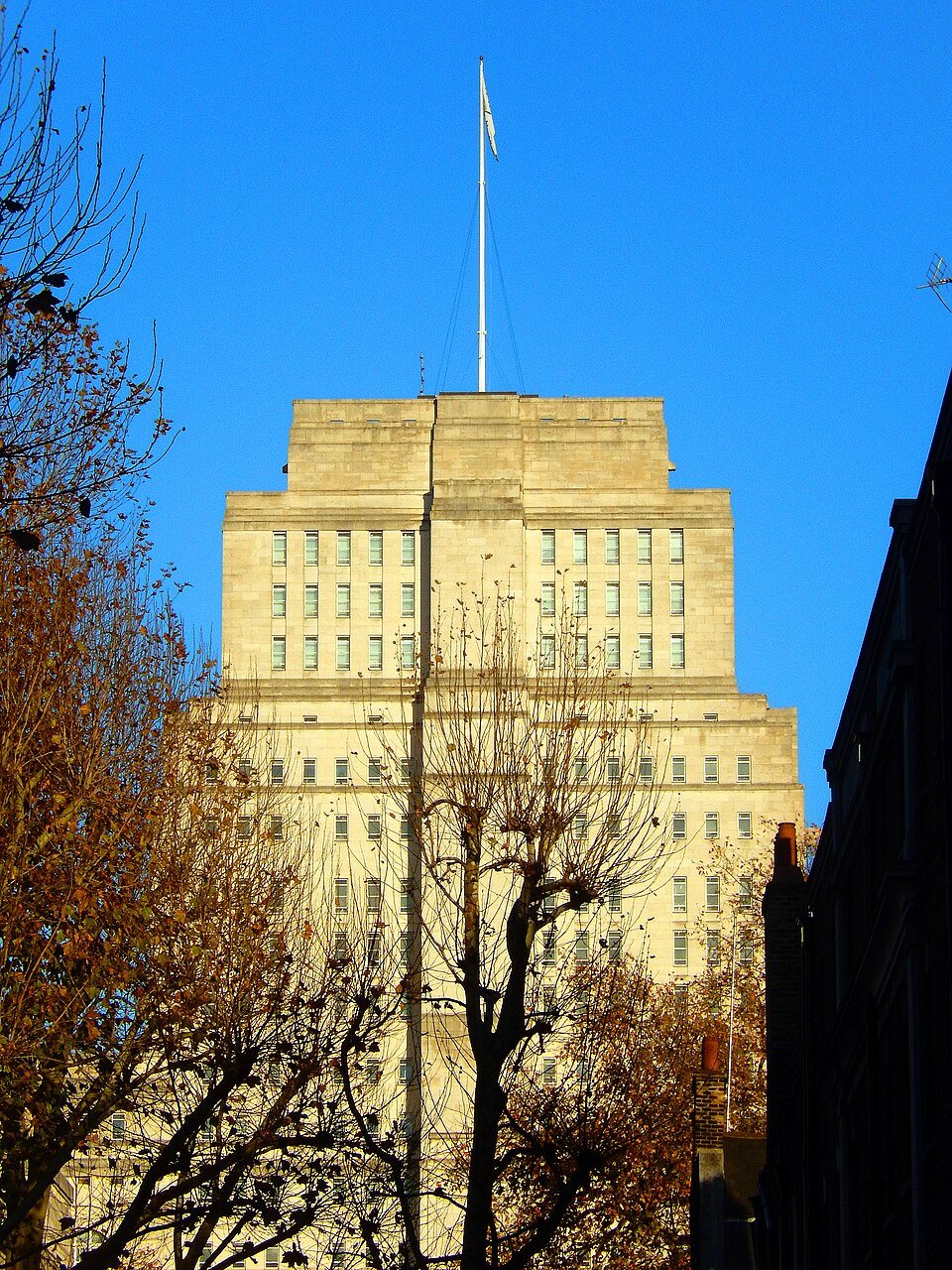
In the United States the past is not burned. It is reviewed, relabeled, and sometimes taken offline. On March 27, 2025, the president signed an executive order on “Restoring Truth and Sanity to American History”, directing officials to remove “improper ideology” from the Smithsonian and to make monuments and park signs avoid content that “inappropriately disparage[s] Americans past or living.” In August 2025 he complained that the Smithsonian dwelt on “how bad Slavery was”; in July 2026 he ordered signs placed outside the National Museum of American History telling visitors where to find “accurate information.” Federal health web pages and datasets came down in early 2025 until a judge ordered them back.
Statistics are part of the record too. When a jobs report on August 1, 2025, revised earlier months down by 258,000, the president fired the commissioner of the Bureau of Labor Statistics the same day and called the numbers “phony.” Each case differs from Oceania in one decisive way: archivists, reporters, and judges could still say what had been there before, and in several cases courts ordered it restored.
Doublethink: Holding Both at Once
“January 6 was a peaceful protest, and the people prosecuted were political prisoners.”
The Associated Press counted more than 1,500 people charged, some with felony assault for beating police officers, and dozens pleaded guilty to assaulting law enforcement. Leaders of the Oath Keepers and Proud Boys were convicted of seditious conspiracy. A pardon ends a sentence. It does not erase the video or the guilty pleas.
Orwell defines doublethink as “the power of holding two contradictory beliefs in one’s mind simultaneously, and accepting both of them.” It is not hypocrisy, which knows it is lying. It is the trained ability to believe the contradiction sincerely.
The clearest American case is January 6, 2021. More than 1,500 people were charged, many with felonies for assaulting police officers. In October 2024 the candidate who had campaigned on “law and order” called the day “a day of love.” On his first day back in office he issued a proclamation calling the prosecutions “a grave national injustice” and granting a “full, complete and unconditional pardon” to all others convicted, including those who beat officers. A movement can back the police or pardon people who attacked them. Holding both as one position, sincerely, is the definition.
A second pair is speech. An executive order signed the same day promised to end federal censorship and protect Americans’ speech. Within months, the government was arresting and moving to deport noncitizen students and scholars for what they had written, a policy a federal judge later found violated the First Amendment.
The Two Minutes Hate and the Enemy Within
Every day at eleven, the workers of the Ministry of Truth gather before a telescreen for the Two Minutes Hate. The face of “Emmanuel Goldstein, the Enemy of the People” appears, and within seconds the room is screaming. Winston, who hates the Party, finds himself screaming too. Orwell’s point is that the rage is real and contagious, and that it can be switched from one target to another at will.
American politics has its own rituals: rally chants such as “send her back”, aimed in July 2019 at a Somali-born congresswoman, and the label “enemy of the people” applied to the press, a history traced on the site’s enemy-of-the-people page. The newer phrase is “the enemy from within,” used in October 2024 about “radical left lunatics” whom the National Guard or military might handle, and repeated in office.
In September 2025 the hate acquired paperwork. A presidential memorandum directed federal terrorism task forces to investigate organized political violence and listed, among its “common threads,” “anti-Americanism, anti-capitalism, and anti-Christianity.” Violence is a crime under any government. Naming attitudes as warning signs is the step Orwell’s Thought Police take next.
Big Brother Is Watching You
Oceania runs on two things: a face and an eye. The face of Big Brother looks down from posters on every landing, captioned BIG BROTHER IS WATCHING YOU, and the telescreen in every room both broadcasts and watches. Under that gaze the worst offense is thoughtcrime, and the novel’s warning is blunt: “Thoughtcrime does not entail death: thoughtcrime IS death.”
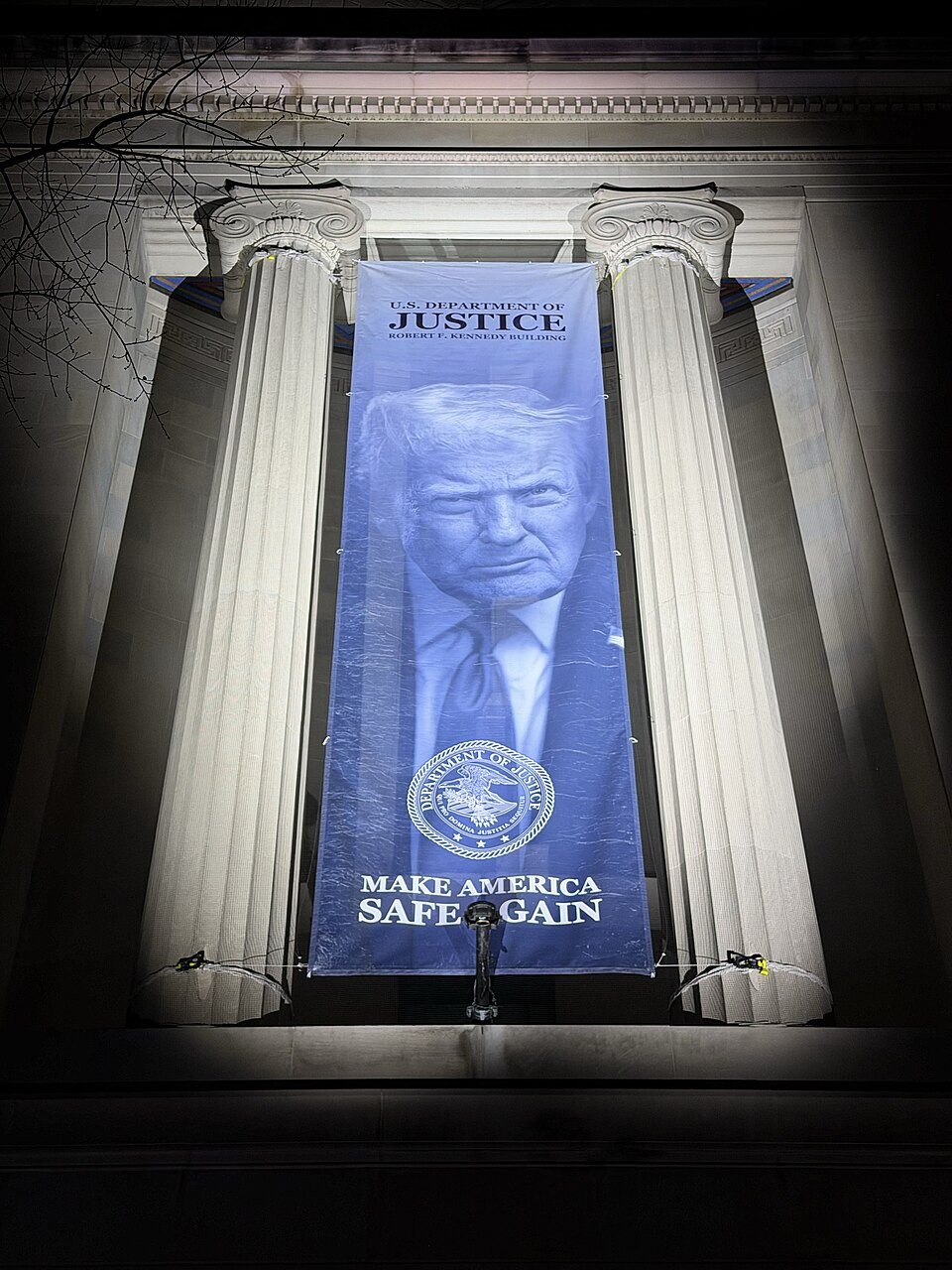
The face has appeared on American federal buildings. In 2025 giant banners of the president went up on the Labor and Agriculture departments, and on February 19, 2026, a banner reading “Make America Safe Again” was hung on the Justice Department, the agency charged with investigating presidents. His name was added to the Kennedy Center by a board he chairs, until a judge ordered it removed. Faces were also taken down: the Pentagon portraits of a general who had criticized him came off the walls within hours of the inauguration, and the new Presidential Walk of Fame hung a picture of an autopen where his predecessor’s portrait belonged.
The eye is harder to see. A March 2025 order told agencies to give designated officials “unfettered access” to state program data and to tear down barriers between federal databases. And in March 2025 a Tufts graduate student, Rumeysa Ozturk, was detained by federal immigration officers after co-writing a student newspaper op-ed. A federal judge later ruled in AAUP v. Rubio that the government had run a policy of deporting noncitizens for their political views, in violation of the First Amendment.
Two Plus Two Makes Five
“The 2020 election was stolen.”
The officials who ran it, including the Trump administration’s own election security agency, called it “the most secure in American history.” Trump’s attorney general, William Barr, found no evidence of fraud that could change the result. More than five years of audits and lawsuits have not produced it. Saying it louder is not evidence.
Before his arrest, Winston writes in his diary: “Freedom is the freedom to say that two plus two make four. If that is granted, all else follows.” By the end, broken in the Ministry of Love, he traces in the dust on a café table: 2 + 2 = 5. The arithmetic is the point. A regime that can make people deny a sum can make them deny anything.
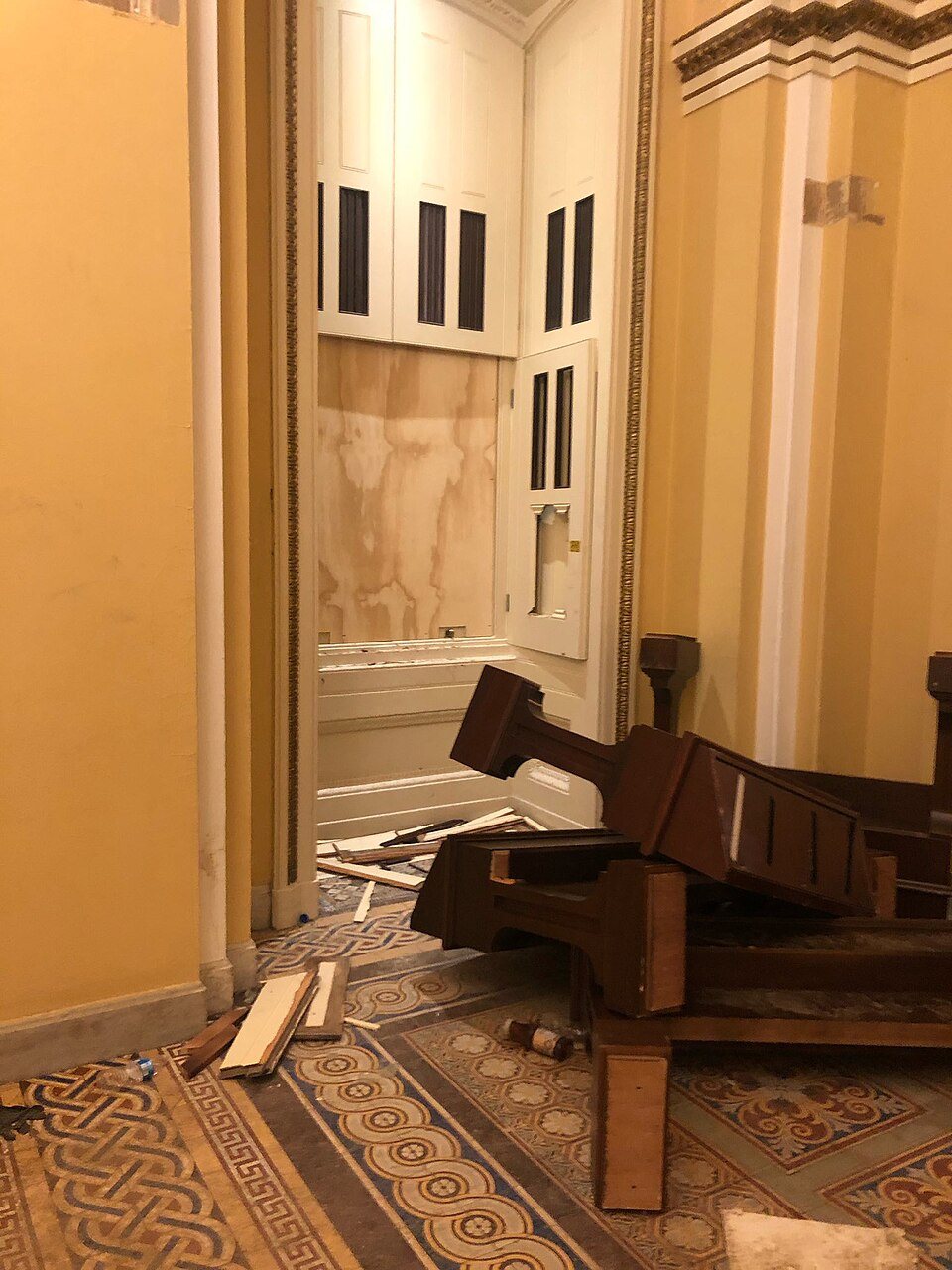
The American equivalent is the 2020 election. The record is not close: the federal and state officials who ran it called it “the most secure in American history,” the president’s own attorney general found no evidence of fraud on a scale that could change the result, and judges dismissed the challenges. Notes of a December 27, 2020, call record the president telling Justice Department leaders: “Just say the election was corrupt and leave the rest to me and the R. Congressmen.”
The demand was not for evidence. It was for a statement. In the novel, O’Brien does not want Winston to pretend that two and two make five; he wants him to see it. The claim that 2020 was stolen has been repeated for six years, a pattern measured on the site’s feels-true page, and believing it became a test of loyalty, which is the subject of that-is-so-me.
Where the Comparison Fails
“If this were really 1984, you wouldn’t be allowed to say any of this.”
True, and that is the point of the warning. Courts have reversed several of the actions compared to the novel, and voters handed Congress to the opposition in November 2026. Orwell wrote to warn people while they could still act. A warning that only applies once dissent is impossible would be useless.
Oceania has no courts, no elections, no newspapers but the Party’s, and no crowds except those the Party assembles. The United States in 2026 has all four, and they have been used. That is the largest difference between the novel and the record, and it is not a small one.
Federal judges, several appointed by Republican presidents, ordered health pages restored, park exhibits returned, the president’s name removed from the Kennedy Center, and banned news outlets readmitted to the White House. On November 3, 2026, voters gave Democrats control of both chambers of Congress, flipping seven Senate seats. Organizers counted millions at No Kings protests in June and October 2025, and police in New York and Washington reported no protest-related arrests in October. The press that the president called “the enemy of the people” kept reporting.
Scholars who study democratic decline mostly describe the American danger in different terms: not a sealed totalitarian state but a competitive system in which elections and courts survive while the incumbent tilts the field. Orwell’s book describes the end of that road, not the road. Its value is as a checklist of warning signs, and the checklist is useful precisely because the institutions that can still answer it are working.
The Right Reads Orwell Too
“The left are the real Orwellians: they tried to build a Ministry of Truth.”
The 2022 Disinformation Governance Board was shut down within months, after public criticism, having never met, and the Supreme Court sided with the government in the social media case. Both parties have reached for speech controls. The test Orwell set is the same for everyone: name what was done, and judge it the same way whoever does it.
Orwell is quoted at least as often on the right as on the left, and the right’s uses deserve the same test. The best-known case is the Disinformation Governance Board, announced by the Department of Homeland Security in April 2022. Critics called it a “Ministry of Truth”; twenty Republican attorneys general demanded that DHS disband “this Orwellian” board. It was paused within three weeks and terminated that August, having never met.
The larger argument concerned federal pressure on social media companies during the pandemic and the 2020 election. In July 2023 a federal judge in Louisiana wrote that the government “seems to have assumed a role similar to an Orwellian ‘Ministry of Truth.’” The Supreme Court reversed in Murthy v. Missouri in June 2024, holding 6 to 3 that the plaintiffs lacked standing; three justices dissented, calling it potentially one of the most important free speech cases in years.
On the evidence, the right’s charge has substance where it is specific: governments should not lean on private platforms to suppress lawful speech, and Orwell would have said so. It weakens when the same movement, once in power, issues word lists, renames geography by decree, and revokes visas over op-eds. Orwell himself was a democratic socialist who attacked totalitarianism of the left and right. He would not have accepted either side’s claim to own him.
The Other Warnings on the Shelf
Orwell was not the only novelist to write a warning, and some critics think he was not the most accurate one. In 1985 the media scholar Neil Postman argued that America had been watching for the wrong dystopia. Huxley’s Brave New World (1932) imagined a population controlled not by pain but by pleasure. Postman’s summary is the most quoted line in the debate: “What Orwell feared were those who would ban books. What Huxley feared was that there would be no reason to ban a book.” A feed with infinite content and short attention fits Huxley better than Orwell, and the flood described on the site’s who-even-knows page is Huxley’s method, not Big Brother’s.
Other books have their own American readers. Ray Bradbury’s Fahrenheit 451 imagined firemen who burn books, and PEN America counted 6,870 instances of books pulled from public school shelves in the 2024 to 2025 school year. Sinclair Lewis’s It Can’t Happen Here (1935) imagined an American demagogue elected on promises to the forgotten man; it climbed bestseller lists again in 2016. Margaret Atwood built The Handmaid’s Tale (1985) from things that had actually happened somewhere.
Each book warns about a different failure. Orwell’s is the state that owns the truth. Huxley’s is a public that stops caring. Bradbury’s is a culture that stops reading. Lewis’s is an electorate that votes for the strongman. The American record has elements of all four, and none matches any of them completely.
How Real Regimes Bent Language and Truth
Orwell drew Oceania from the real regimes of his time, and the scholars who studied those regimes give the most useful tools for the present. Hannah Arendt, who fled Nazi Germany in 1933, concluded in The Origins of Totalitarianism (1951) that the goal of totalitarian propaganda was not belief. She wrote that its “ideal subject” is the person “for whom the distinction between fact and fiction” no longer exists.

Victor Klemperer, a Dresden philologist who survived the Nazi years, recorded in LTI how the regime changed people by changing ordinary words: superlatives, euphemisms, fanaticism recast as virtue. In 2016 the RAND Corporation described a newer model in Russian state media, a “firehose of falsehood”: high volume, many channels, rapid repetition, and no commitment to consistency or to objective reality. It works without anyone believing a particular lie, because the volume exhausts the effort to check.
Put together, these describe the tools more precisely than the novel does. Oceania needed a ministry to destroy records. A modern government needs only to produce more claims than anyone can answer, repeat them, rename things, and let fatigue do the rest. Orwell’s essays, not his novel, contain the remedy he trusted: plain words, concrete claims, and the refusal to believe a fact because of which side states it.