When Life Begins
“Life begins at conception. That is science, not religion.”
Biology agrees that a new human organism begins at fertilization. What biology cannot tell you is when that organism gains the moral standing of a person, which is a question philosophers have argued over for decades. Marquis and Thomson, writing from opposite sides, both start from the facts and still disagree about rights.
The foundational argument is the strongest one, and its factual half is correct. At fertilization a sperm and an egg form a single cell with its own genome, and if nothing interrupts it, that cell develops into a baby. Embryology describes this plainly, and opponents of abortion are right to say that the embryo is alive and is human. A pro-choice argument that denies either point is arguing against the textbook.
The disagreement starts one step later, with a different question: when does a living human organism become a person with a right to life that outweighs the rights of the woman carrying it? That is a moral question, and no instrument can measure the answer. Philosophers who take it seriously split. Don Marquis argued in 1989 that killing is wrong because it robs a being of a valuable future, and an embryo has such a future. Judith Jarvis Thomson argued in 1971 that even if the fetus is a person from conception, no person has a right to the use of someone else’s body to stay alive.
Both arguments are serious, and neither one is settled by more data. Others draw the line at sentience, at viability, or at birth, and each line has its own well-known problems. What science can do is answer the factual questions that the moral arguments lean on: what an embryo can feel, what abortion does to women, and what bans do to births and deaths. The rest of the case can be checked against those answers.
Heartbeats and Fetal Pain
“There’s a heartbeat at six weeks, and by 20 weeks the baby can feel pain.”
At six weeks an ultrasound picks up electrical activity in cells that will become the heart; the chambers have not formed, which is why obstetricians call heartbeat the wrong word. On pain, a 2005 JAMA review and Britain’s Royal College of Obstetricians found the brain wiring for pain develops after about 24 weeks.
Two laws of the last decade were named for biological milestones. The first set of laws, of which Texas’s 2021 statute is the best known, bans abortion once a “fetal heartbeat” is detected, usually around six weeks of pregnancy. The claim is partly correct: rhythmic electrical activity in early cardiac tissue is real and can be detected. The word is the problem. The American College of Obstetricians and Gynecologists calls the term clinically inaccurate, because the chambers of the heart have not yet formed and the sound a patient hears is produced by the ultrasound machine from electrical signals. Six weeks of pregnancy is also only about four weeks after conception, a point at which many women do not yet know they are pregnant.
The second set of laws bans abortion at 20 weeks on the ground that the fetus can then feel pain. Here the evidence runs mostly the other way. A 2005 systematic review in JAMA concluded that the brain connections needed to perceive pain begin forming between 23 and 30 weeks. Britain’s Royal College of Obstetricians and Gynaecologists reached a similar conclusion in 2010 and, after a fresh review in 2022, reported that brain responses distinguishing painful from harmless touch appear at about 33 weeks.
The question is not closed, and honesty requires saying so. In 2020 two researchers who disagree about abortion, one for and one against, argued together that the neuroscience cannot fully rule out some form of pain before 24 weeks. They did not argue for 20-week bans. They argued for pain relief as part of humane care. That is the strongest version of the conservative claim, and it is about the second half of pregnancy, when very few abortions happen.
Is Abortion Dangerous for Women
“Abortion hurts women. It causes depression, breast cancer and dangerous complications, and the pill is worse.”
The Turnaway Study followed nearly 1,000 women for five years and found that having an abortion did not harm their mental health; being denied one raised anxiety in the short term. The National Cancer Institute found no link to breast cancer. Childbirth carries about 14 times the risk of death that legal abortion does.
A newer strand of the argument says that abortion harms the women who have it, so restrictions protect them. Each specific harm has been studied. On mental health, the American Psychological Association’s 2008 task force found that a single first-trimester abortion carries no greater risk of mental health problems than carrying an unplanned pregnancy to term. The strongest test came from the Turnaway Study, which compared women who got abortions with women who arrived just past a clinic’s gestational limit and were turned away. Over five years, the women who had abortions did no worse, and the women denied one reported more anxiety and lower self-esteem at first. A widely cited 2011 meta-analysis reached the opposite conclusion, and its methods drew sharp criticism.
The breast cancer claim was examined by more than 100 experts at a National Cancer Institute workshop in 2003, which concluded that induced abortion is not associated with an increase in breast cancer risk. On the abortion pill, the FDA’s record covers more than two decades and millions of uses, and its label puts serious adverse reactions below half a percent. The claims of far higher harm come from a study the publisher later retracted and a 2025 report built on an undisclosed insurance database.
The comparison that matters most is with the alternative. For a pregnant woman, the alternative to abortion is childbirth, and a 2012 analysis of national data found the risk of death in childbirth about 14 times higher than with legal abortion. One conservative safety claim does point to a real gap: women who change their minds after the first pill are offered progesterone as “abortion pill reversal,” and the only randomized trial of it was stopped early for safety reasons, so the treatment remains unproven rather than disproven.
Abortion Up to Birth
“Democrats want abortion up to the moment of birth, even after birth.”
CDC data show about 93 percent of abortions happen by 13 weeks and about 1 percent at 21 weeks or later, usually for severe fetal anomalies or a threat to the mother. Killing a newborn is homicide in every state, and a 2002 federal law defines any infant born alive as a person.
The claim has a true core that is usually left out. A handful of states, Minnesota among them, set no gestational limit in law, so it is accurate to say that some states do not ban abortion at any particular week. What the claim implies, that healthy pregnancies are routinely ended in the ninth month, is not what the record shows. By CDC data for 2022, about 93 percent of abortions happen by 13 weeks, and about 1 percent happen at 21 weeks or later.
The women in that 1 percent are a specific group. Researchers who interviewed women having abortions at 20 weeks or later found two main paths: serious medical news, such as a fatal fetal anomaly found at the 20-week anatomy scan, and delays caused by poverty, travel, a late-recognized pregnancy, or a violent partner. Bans earlier in pregnancy tend to push more women into the second path. The method critics once called partial-birth abortion has been a federal crime since 2003.
“After birth” is a different matter. In a September 2024 debate, Donald Trump said Democrats support “execution after birth”; fact-checkers and the moderator noted that killing a newborn is homicide in every state. A 2002 federal law already defines any infant born alive, at any stage of development, as a person. The phrase “after-birth abortion” comes from a 2012 paper by two philosophers, which was widely condemned and has never been the position of any legislature or party.
Do Bans Save Lives
“Since Dobbs, pro-life laws have saved thousands of babies, and the exceptions protect women.”
Abortions rose after Dobbs: about 1.13 million in 2025, according to both the Society of Family Planning and the Guttmacher Institute, more than in 2020. A JAMA study did find about 22,000 extra births in ban states, along with infant deaths about 5.6 percent above what was expected.
This is the argument on which the movement asked to be judged, and its central prediction did not hold nationally. Abortion counts went up after Dobbs, not down: about 1.13 million abortions were provided in the formal health system in 2025, more than in any year of the decade before. Much of the growth came from telehealth prescriptions mailed under shield laws into states with bans, along with travel across state lines.
The claim is partly correct at the state level. A 2025 study in JAMA estimated about 22,180 more births than expected in 14 states with bans, an increase of 1.7 percent, concentrated among women who are poor, young, unmarried or on Medicaid. Those are births that would not otherwise have happened, which is what supporters of the bans intended. The same research team found infant deaths about 5.6 percent above expectations in the ban states, driven largely by congenital anomalies, and in Texas the rise came soon after its six-week ban.
Exceptions for a woman’s life exist in every ban, and supporters point to hundreds of medically necessary abortions reported in Texas as proof that they work. The cases that reached the public show how they fail in practice: doctors wait until a patient is sick enough to fit the legal words. ProPublica documented deaths after delayed care in Georgia and Texas and a sharp rise in sepsis among Texas women losing pregnancies in the second trimester. There are early signs of an obstetrics workforce problem as well.
Adoption and Regret
“Adoption is the loving option, and women who abort live to regret it.”
In the Turnaway Study, only 9 percent of women who were denied an abortion and gave birth placed the baby for adoption; the rest raised the child. Five years after an abortion, 99 percent of women said it had been the right decision, and relief was the most common emotion.
Adoption is a real and good option for some women, and conservatives are right that it is underused and that it changes lives. The question is whether it substitutes for abortion. During the Dobbs litigation, the Court’s majority noted that every state now has safe haven laws and that demand from couples hoping to adopt far exceeds the number of newborns available. That is accurate. It answers the question of whether babies would find homes. It does not answer whether women who did not want to be pregnant would choose adoption.
The best evidence on that comes from women who were actually denied abortions. In the Turnaway Study, 9 percent of those who gave birth chose adoption; 91 percent raised the child themselves. The obstacle is not adoption’s availability. It is that the choice a woman faces after a denied abortion is between raising a child and giving away a child she has carried, and most choose to raise it.
Regret is the companion claim. Some women do grieve or regret an abortion, and their accounts deserve respect. As a population claim, however, regret has been measured, and the measurement points the other way. Over five years, the women in the Turnaway cohort who had abortions did not develop rising regret: 97.5 percent said it was the right decision a week after, and 99 percent said so at five years. Relief remained the most common emotion. The women who did report negative feelings were most often those who had found the decision difficult or felt stigma in their communities.
Planned Parenthood and Tax Money
“Planned Parenthood sells baby parts, and our tax dollars pay for abortions.”
A Texas grand jury investigated Planned Parenthood after the 2015 videos and cleared it; it indicted the videographers instead, and a federal jury later found them liable for fraud and trespass. Federal money has not paid for abortion since the Hyde Amendment of 1976, except for rape, incest or a threat to life.
In 2015 an anti-abortion group called the Center for Medical Progress released edited undercover videos of Planned Parenthood officials discussing payments for fetal tissue donated to research. Federal law allows clinics to recover the costs of handling and transporting tissue and bans selling it for profit. The question was which of the two the videos showed. A Houston grand jury convened to investigate Planned Parenthood found no wrongdoing and indicted the videographers for using fake government IDs; the charges were later dismissed on procedural grounds. In the civil case Planned Parenthood brought, a federal jury found the activists liable for fraud, trespass and illegal recording, and an appeals court largely upheld the verdict in 2022.
The taxpayer argument is closer to correct than its critics usually admit, though not in the way it is usually stated. Direct federal payment for abortion has been barred since the Hyde Amendment, with exceptions only for rape, incest and threats to the woman’s life. Planned Parenthood does receive federal money, mainly Medicaid payments for other services such as contraception and cancer screening, and opponents argue that money is fungible. They are also right that funding rules change outcomes: research summarized by KFF finds that when Medicaid does not cover abortion, some women who would have ended a pregnancy give birth instead. Whether that is a cost or a benefit is the moral question, not the factual one.
Margaret Sanger and the Genocide Claim
“Margaret Sanger was a racist who founded Planned Parenthood to wipe out Black babies. Abortion is Black genocide.”
Sanger did support eugenics, and Planned Parenthood of Greater New York removed her name from its clinic in 2020 for that reason. She also opposed abortion, as Justice Thomas noted. Black women’s higher abortion rate tracks their higher rate of unintended pregnancy, according to the Guttmacher Institute.
Much of this claim is true, and the honest answer starts by saying so. Margaret Sanger, who founded the organization that became Planned Parenthood, embraced the eugenics movement, as many Progressive Era reformers did, and wrote that birth control “opens the way to the eugenist.” Her 1939 Negro Project used language that the scholars who edit her papers say smacks of racism. In 2020 Planned Parenthood of Greater New York removed her name from its Manhattan clinic because of what its board chair called her racist legacy.
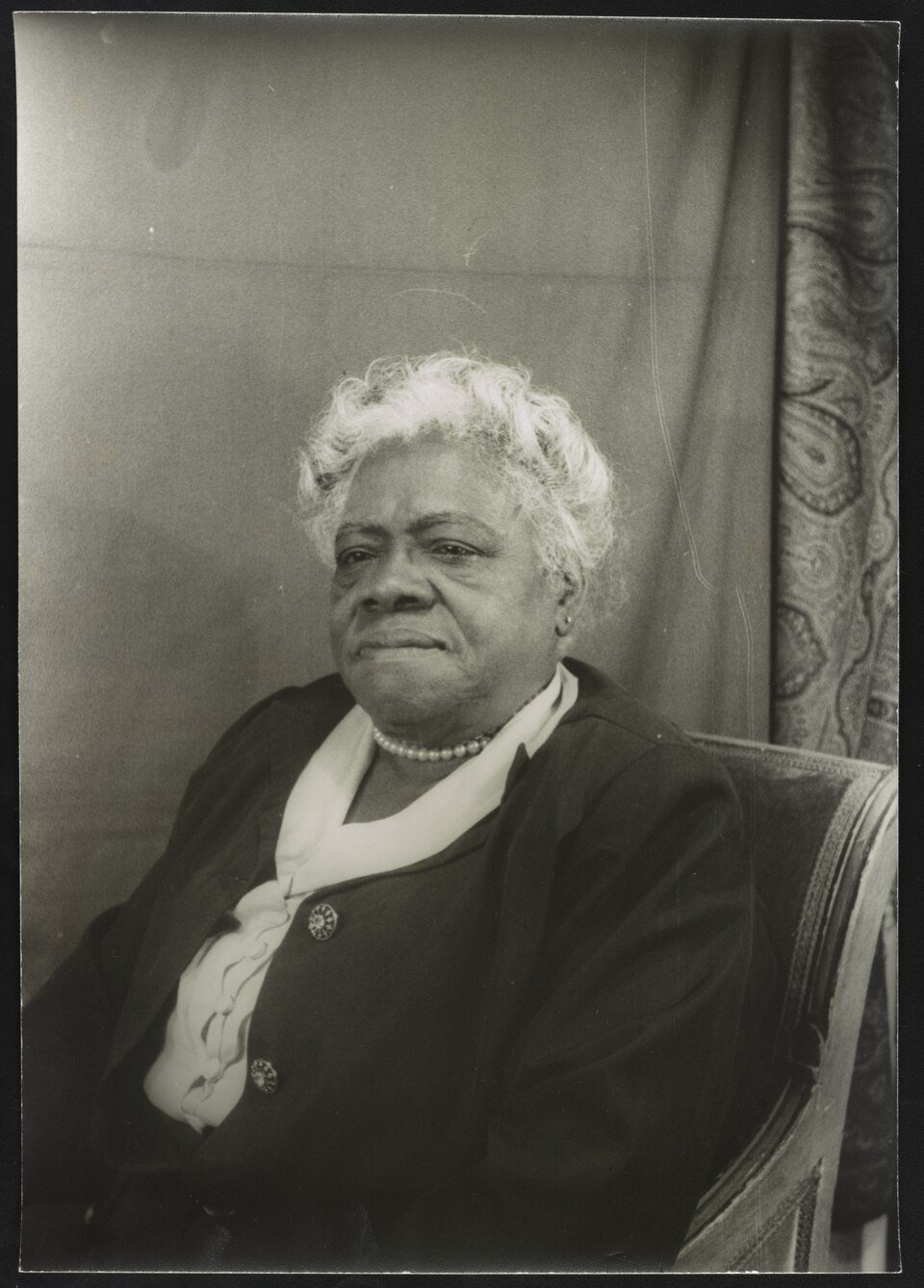
Two parts of the claim do not hold. The first is about abortion itself: Sanger distinguished sharply between birth control and abortion and condemned abortion, a point Justice Clarence Thomas acknowledged in a 2019 concurrence that made the eugenics argument against abortion. Sanger died in 1966, seven years before Roe. The second is the charge of a present-day plan. Black women do have abortions at about four times the rate of white women, by CDC data for 2022. The gap follows the gap in unintended pregnancy, which follows gaps in access to contraception and health care. Women decide to have abortions for their own reasons, and in Pew’s 2024 survey, 73 percent of Black adults said abortion should be legal in all or most cases, a higher share than among white adults.
What Americans Want, and What Roe Was
“Most Americans are pro-life, and Roe was bad law. Even Ruth Bader Ginsburg said so.”
In Gallup’s 2026 poll, 53 percent called themselves pro-choice and 42 percent pro-life, and voters have backed abortion rights in most state ballot measures since 2022. Ginsburg criticized Roe’s reasoning and scope, but she called the decision whether to bear a child central to a woman’s life and dignity.
The polling claim is wrong as stated and partly right in substance. More Americans now call themselves pro-choice than pro-life, 53 percent to 42 percent in Gallup’s May 2026 poll. Yet in the same poll, 49 percent wanted abortion illegal or legal in only a few circumstances, against 48 percent who wanted it legal in all or most. Pew’s 2024 survey, which asks the question differently, found 63 percent favoring legality in all or most cases. Americans support some limits and oppose bans. Where voters decided directly, ballot measures favoring abortion rights won in most states from 2022 to 2026, including Kansas, Ohio and Missouri, and lost in a few, including Florida, South Dakota and, in 2026, Idaho.
The legal claim is the conservative argument’s firmest ground. Many scholars who supported legal abortion thought Roe was poorly reasoned. John Hart Ely, a liberal Yale professor, wrote in 1973 that it was not constitutional law at all. Ruth Bader Ginsburg argued in 1985 and 1992 that the Court had moved too far, too fast, and should have rested the right on women’s equality. But using her as a witness against abortion rights reverses her meaning: at her 1993 confirmation hearing she called the decision whether to bear a child “central to a woman’s life.” The Dobbs majority quoted both critics when it overruled Roe in 2022.
The Bible and the History
“The Bible forbids abortion, Christians have always opposed it, and America banned it from the start.”
The Bible never mentions abortion directly. Exodus 21 treats causing a miscarriage as a property loss paid by fine. In 1971 the Southern Baptist Convention called for allowing abortion in cases including rape and threats to the mother’s health. Early American common law allowed abortion before quickening, around the fourth month.
The Bible has no verse that names abortion. Opponents read verses on God forming life in the womb as settling the matter; others point to Exodus 21, where a man who causes a woman to miscarry pays a fine, while causing her death brings life for life. The Catholic Church teaches that life must be protected absolutely from conception and says it has condemned abortion since the first century. Classical Jewish law puts the mother’s life first until the head or most of the body has emerged. Religious teaching on abortion is far older and more varied than the American political alignment, which is newer than most people assume.
As late as 1971 the Southern Baptist Convention called for laws allowing abortion in cases of rape, incest, severe fetal deformity and danger to the mother’s emotional or physical health. The historian Randall Balmer argues that evangelical leaders made abortion a rallying issue only in 1979, a view other historians dispute in part.
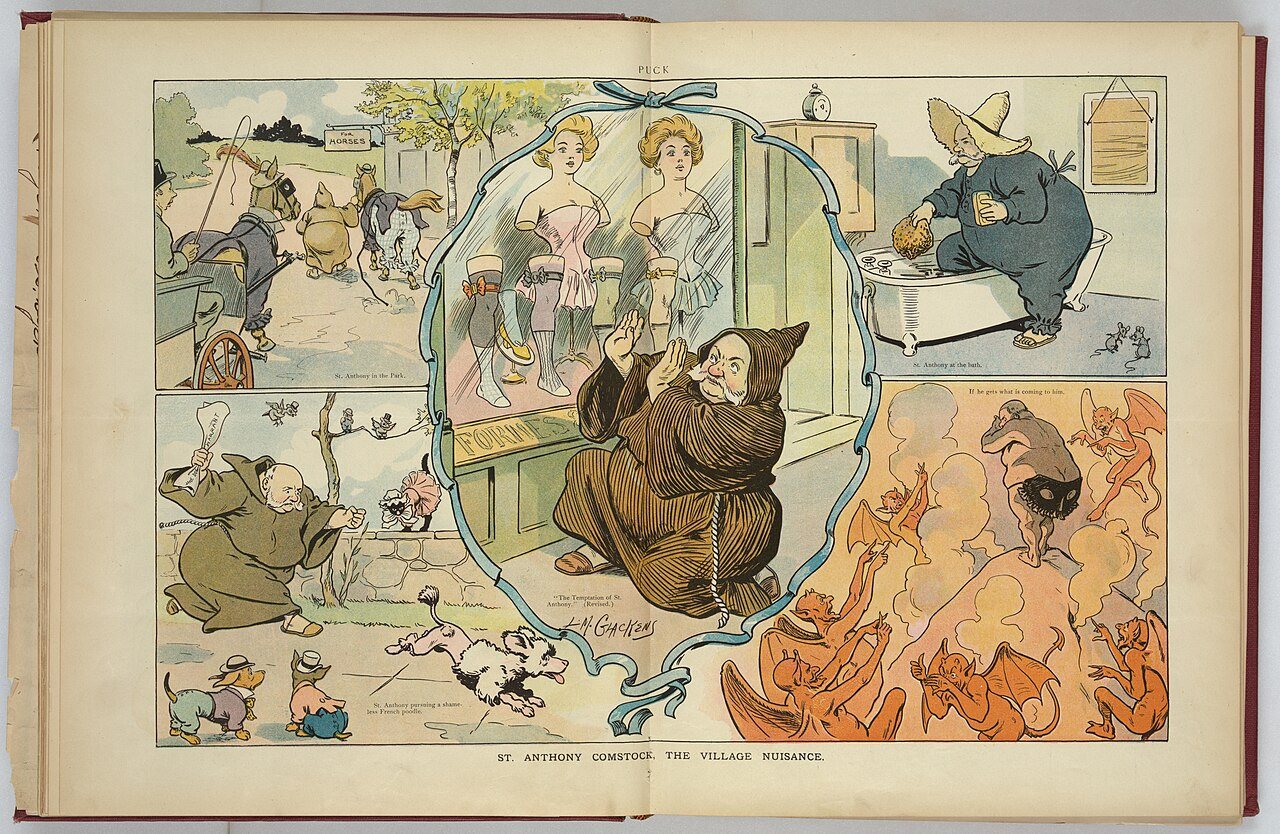
The legal history runs the same way. Under the common law that early America inherited, abortion before quickening, the point near the fourth month when a woman feels movement, was not a crime. Bans at every stage came in the second half of the 1800s, driven by a campaign of physicians and followed by the federal Comstock Act of 1873. Even under those laws, clergy ran referral networks and a Chicago group known as Jane performed abortions itself.
Who Has Abortions
“Abortion is birth control for irresponsible young women who don’t want to be mothers.”
CDC data for 2022 show that about 59 percent of women who had abortions had already given birth at least once. The Guttmacher Institute found 41 percent had incomes below the federal poverty line. Most are mothers making a decision about the children they already have.
The picture of the typical patient in the debate is a careless teenager. The data describe someone else. Most women who have abortions are already mothers: in CDC data for 2022, about 59 percent had at least one previous birth, and adolescents made up about a tenth of patients in Guttmacher’s survey. Most are in their twenties, most are unmarried, and many are poor. One in four American women is expected to have an abortion by age 45 at recent rates.
That profile changes what the bans do in practice. A woman who already has children and little money is the person least able to travel or wait, and the person the births research found most affected. It also changes the conversation about responsibility. Men are half of every pregnancy, and after Dobbs young men’s vasectomy rates rose too, though less than young women’s sterilizations. The newest fronts in the fight, over the abortion pill by mail, are about the same women: the ones who cannot get to a clinic.
What Actually Lowers Abortion
“If you want fewer abortions, you have to make them illegal.”
The US abortion rate fell by more than half from 1980 to 2017 while abortion was legal, and a St. Louis study that gave women free long-acting contraception cut their abortion rate to less than half the regional rate. Worldwide, abortion rates are similar where it is banned and where it is legal, the Guttmacher Institute reports.
Everyone in the debate says they want fewer abortions, and the record shows what has delivered them. The US abortion rate fell from 29.3 per 1,000 women in 1980 to 13.5 in 2017, the lowest since Roe, entirely under legal abortion. Researchers credit falling unintended pregnancy, much of it from better contraception. When a St. Louis project offered free long-acting contraception such as IUDs and implants to more than 9,000 women and teenagers, their abortion rate dropped to less than half the regional rate.
The global evidence points the same way. Abortion rates are similar in countries where abortion is banned and where it is broadly legal, because restrictive countries have higher rates of unintended pregnancy. What legality changes is safety: the World Health Organization estimates that about 45 percent of abortions worldwide are unsafe, and it names lack of access to safe care as the reason women resort to them.
The American numbers after 2022 repeat the lesson. Bans moved abortions across state lines and into the mail, and the national rate rose. If the goal is fewer abortions, the measured tools are contraception, support for women who want to carry a pregnancy, and fewer unintended pregnancies. Those goals are shared across the divide, which makes them the place where the argument could become a policy.