What Totalitarianism Is
A government that seeks to subordinate every part of individual life to the authority of the state, through one party, one ideology and terror. Britannica defines it as a form of government that theoretically permits no individual freedom and seeks to subordinate all aspects of individual life to the authority of the state. Benito Mussolini coined the word “totalitario” in the early 1920s to describe the new fascist state of Italy, “all within the state, none outside the state, none against the state” (the word).
By the beginning of World War II, Britannica says, “totalitarian” had become synonymous with absolute and oppressive single-party government. It is distinguished from dictatorship, despotism or tyranny by its supplanting of all political institutions with new ones and its sweeping away of legal, social and political traditions (the goal and the ideology).
Who Rules: A Single Party and Its Leader
A single party, centrally directed and composed exclusively of loyal supporters of the regime, is one of totalitarianism’s two distinguishing features, Britannica says. The party is at once an instrument of social control, a vehicle for ideological indoctrination and the body from which the ruling group recruits its members (the party). Above it stands a charismatic leader (the popular form).
The other feature is an official ideology imposed through state power. Nonconformity of opinion is treated as resistance, and the state police or secret police enforce the orthodoxy. Britannica adds that police in a police state follow known procedures, while in a totalitarian state they operate outside the law, and their actions are purposefully unpredictable (the police).
Who Owns It: Control, Whoever Holds the Deeds
Totalitarianism is defined by control of life, not by a property regime, but the standard checklist includes economic control. EBSCO’s summary of the Friedrich and Brzezinski model, as set out by the political scientist Sarah Birch, lists six features: an official ideology, a single party usually led by a dictator, a terroristic police force, a monopoly on communication, a monopoly on violence and state control of economic life (the six features).
In practice the cases differ. Britannica’s examples are the Soviet Union under Stalin, Nazi Germany, the People’s Republic of China under Mao Zedong and North Korea under the Kim dynasty (the examples).
The Claim to Rule
The claim is the goal. Britannica says the totalitarian state pursues some special goal, such as industrialization or conquest, to the exclusion of all others, and directs all resources to it regardless of cost. An ideology grows up that explains everything in terms of the goal, and because pursuit of the goal is the only ideological foundation, achievement can never be acknowledged.
The rest follows. Any dissent is branded evil, internal differences are not allowed, and the resulting popular support permits the state the widest latitude of action of any form of government.
What It Promises and What It Asks
It promises a unified people moving toward a great end. Britannica says old religious and social ties are replaced by artificial ties to the state and its ideology, and the diversity among individuals blurs into mass conformity, or at least acquiescence (the social fabric).
It asks everything. Participation in approved public organizations is at first encouraged and then required, and whole classes of people can be singled out for persecution, the Jews in Nazi Germany and the kulaks, wealthy peasant farmers, in Stalin’s Soviet Union, linked with an external enemy and blamed for the state’s troubles (the targets).
A Short History of Totalitarianism
Britannica says the broad pattern of strong central rule that tries to control all aspects of life has historical precedents: the Mauryan dynasty of India, the Qin dynasty of China and the reign of the Zulu chief Shaka (the precedents). But Nazi Germany (1933 to 1945) and the Soviet Union under Stalin (1924 to 1953) were the first examples of decentralized or popular totalitarianism, in which the state won overwhelming popular support. That support was not spontaneous: it depended on a charismatic leader and on modern developments in communication and transportation.
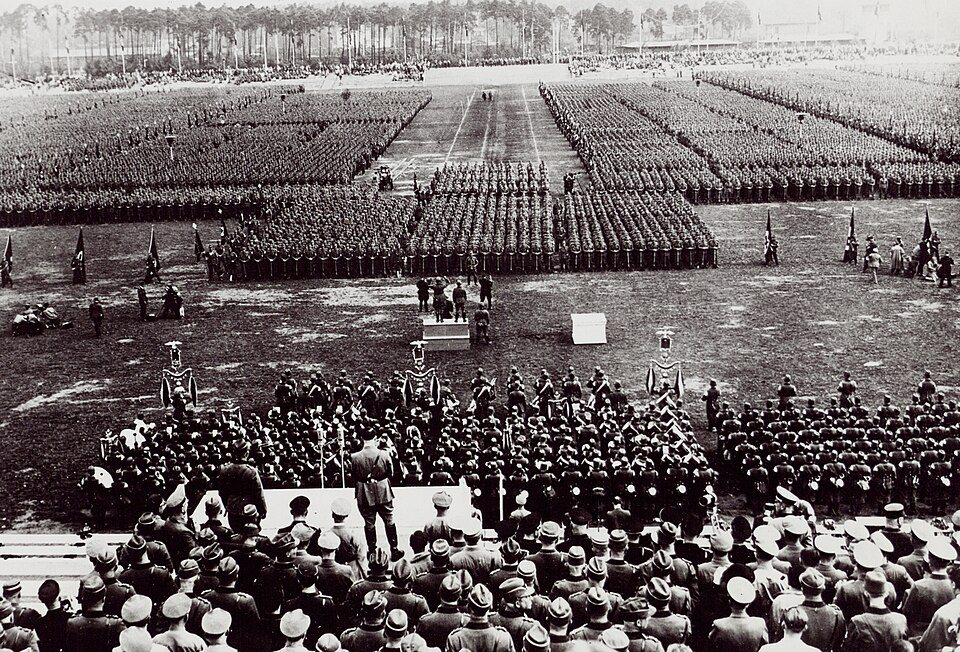
The theory followed the regimes. Hannah Arendt argued in The Origins of Totalitarianism (1951) that such rule arises in capitalist societies that have experienced social alienation from the rigors of economic individualism (Arendt). Later political scientists reduced the concept to checklists, and later still critics asked whether any real regime has ever fit one (the critics).
The Forms of Totalitarianism
Britannica’s examples fall into three groups: fascist Italy and Nazi Germany, Stalin’s Soviet Union and the Soviet-dominated regimes of eastern Europe, and communist cases such as Mao’s China and North Korea under the Kim dynasty. Its authoritarianism article adds Myanmar under Ne Win and the military council that followed, from 1962 to 2011, and says fascist regimes differ from totalitarian ones in enforcing a rigid social hierarchy while controlling society less pervasively.
Britannica notes that the first full cases were forms of popular totalitarianism, where mass support, not fear alone, carried the state.
Where It Rules and Where It Ruled
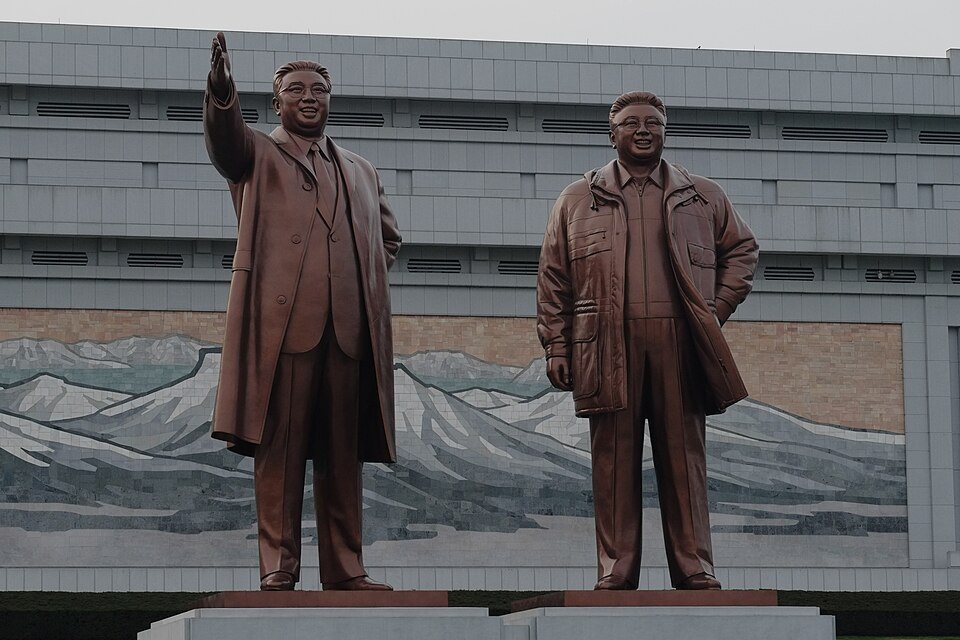
Britannica names the Soviet Union, Nazi Germany, Mao’s China and the Kim dynasty’s North Korea, and says there are very few contemporary instances of fully totalitarian or fascist rule (how few remain). Freedom House’s 2026 report on North Korea calls it a one-party state led by a dynastic totalitarian dictatorship with a system of camps for political prisoners (North Korea).
In sub-Saharan Africa, Britannica says, Eritrea is the only totalitarian dictatorship to date (Eritrea). Turkmenistan, which Freedom House scores 1 out of 100, is an authoritarian state in which political rights are almost completely denied (Turkmenistan).
The Case for It and the Case Against It
“Totalitarianism is just a harsher word for dictatorship.”
Britannica says totalitarianism differs from dictatorship, despotism or tyranny by replacing all political institutions and sweeping away legal and social traditions, and by imposing an official ideology on its citizens. Rule by unpredictable police outside the law is the further difference from a police state.
Britannica does not make the case for it, but it records what the regimes offered: popular support that the Nazi and Soviet regimes won and goals such as industrialization or conquest, with all resources directed to them regardless of cost.
The case against rests on the record. Britannica’s authoritarianism article says Pol Pot’s regime killed up to 30 percent of Cambodia’s population, about 2.8 million people, and that some 4 million died in the Ukrainian famine of 1931 to 1934 that Stalin created and prolonged (the death tolls). Freedom House says North Korea’s camps involve torture, forced labor and starvation.
What Totalitarianism Is Not
“Any repressive government is totalitarian.”
Britannica’s authoritarianism article says there are very few contemporary instances of fully totalitarian or fascist rule, and that many authoritarian regimes could not completely control their societies. Freedom House scores Turkmenistan 1 and Eritrea 3 out of 100 yet describes them as authoritarian states, not totalitarian ones.
It is not the same as authoritarianism. Britannica’s authoritarianism article reserves the term for regimes that use state institutions to brainwash and completely control their populations, and treats it as one type among several. It is not a police state, where police follow known and consistent procedures. And it is not fascism in every respect: fascist regimes resemble totalitarian ones in mobilizing the public under a mass party and glorifying a leader, but control society less fully.
The label is also used loosely. The EBSCO survey notes scholars have asked whether it is a project to remake humanity, an ideal type to which no actual dictatorship conforms, or only a negative definition.
Totalitarianism Today
Freedom House’s 2026 report on North Korea uses the word “totalitarian” for its government: 3 out of 100, with 0 of 40 for political rights. The state runs all media outlets, freedom of assembly is not recognized, surveillance is pervasive and political punishments are severe. Eritrea also scores 3, and Turkmenistan 1.
Britannica’s point is that the old totalitarian form is now rare, while authoritarian rule is common. Its authoritarianism article reports that most authoritarian regimes are personalist, military, single-party or monarchical, and that authoritarian populism has driven recent autocratization, which is why the question of how close such regimes come to total control remains open.