Abuses of Power

High-Control Religious Groups and Extremism

Twenty documented cases from the United States and abroad: what drew people in, how leaders exercised authority, what happened to children raised inside the groups, and what courts, investigators, and former members established.

Updated November 2026 · 20 cases

The Cases

How to Compare the Cases

Cult or High-Control Group

How much power can leaders exercise over members’ housing, finances, relationships, medical care, access to outsiders, and ability to leave? “Cult” has several competing uses. High-control describes specific patterns of coercion and dependency.

Extremism

What ideas and goals does the movement pursue, and what conduct does it justify? The term varies by field and context and can describe nonviolent ideologies.

Violent Extremism

Does the group use or support violence to advance an ideological goal? A group can exercise coercive control internally and also pursue ideological violence. Aum Shinrikyo illustrates that overlap.

A movement’s religious roots identify the traditions and ideas its leaders drew on. Each conduct claim applies to the named group, leadership period, institution, or defendant. The courts establish specific legal findings. Survivor testimony describes lived experience, a regulatory finding addresses an institution’s conduct, and a government investigation may still be examining allegations.

The FBI’s historical case files on the Ku Klux Klan document organized racial terror as an example of violent extremism.

Sources: Cambridge University Press, Abuse in New Religious Movements · Humanities and Social Sciences Communications, Review of Definitions of Extremism (2025) · FBI and DHS, Domestic Terrorism Definitions, Terminology, and Methodology · FBI, Ku Klux Klan Case History

Three Anchor Cases

Children of God

The Family International

Origins and Recruitment

David Berg founded the movement in Huntington Beach, California, in 1968. Its early names included Teens for Christ, Children of God, and the Family of Love. It recruited counterculture youth through Christian outreach and took shape as an international missionary network organized around communal homes. Berg circulated written teachings that shaped life inside those homes.

Doctrine and Abuse

Berg promoted a recruitment practice called “Flirty Fishing,” in which adult women used sexual relationships as evangelism. Separately, former members raised in the group described childhood sexual abuse. In a 2008 public letter to second-generation members, leaders Karen Zerby and Steve Kelly acknowledged that Berg’s writings were used to justify sexual contact between adults and minors and that abuse occurred. The Family International says it discontinued its communal structure in 2010 and now operates as an online network.

First-Person Reading

Daniella Mestyanek Young’s memoir Uncultured recounts her childhood in the group and her life after leaving.
Lev Tahor

Hebrew for "Pure Heart"

Origins and Movement Across Borders

Rabbi Shlomo Helbrans founded Lev Tahor, Hebrew for “Pure Heart,” in Israel in the late 1980s. The group developed a strict interpretation of Jewish law, with religious education inside the community, long prayer sessions, and arranged marriages. Members lived in New York and Quebec. Many moved to Ontario in 2013 as Quebec child-welfare authorities sought intervention, then settled in Guatemala. Shlomo’s son Nachman took over after his father’s death in 2017.

The Case That Shows How Leaders Enforced Their Authority

According to trial evidence, Nachman arranged for his 12-year-old niece to marry an 18-year-old man. The religious ceremony took place the following year. The girl’s mother left the Guatemala community, reunited with her children in New York, and received sole custody. In December 2018, group members kidnapped the girl, then 14, and her younger brother. Authorities recovered them in Mexico about three weeks later. Nachman Helbrans and Mayer Rosner received 12 years each for child sexual exploitation and kidnapping offenses. The Second Circuit affirmed their judgments in April 2025. Three other leaders received prison terms of 12 to 14 years for their roles in the same case.

Child-Protection Actions

Guatemalan authorities removed 160 children from a compound in December 2024 after reports of abuse. In November 2025, Colombian officials located 17 minors with group members at a hotel and placed them in protective custody. Five had active Interpol missing-person alerts. These actions took place in separate jurisdictions and illustrate the recurring challenges of protecting children across borders.

The Nuwaubian Movement

Ansaaru Allah Community

Origins and Changing Identity

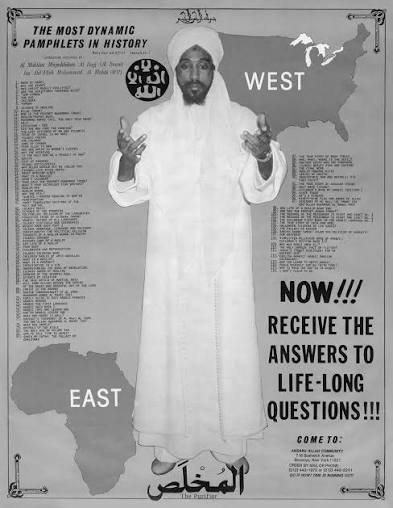
Dwight “Malachi” York led the movement through several names and sets of teachings. Its Ansaaru Allah Community phase was centered in Brooklyn and identified with Islam. A former member told the Los Angeles Times that the group appealed to parents seeking a structured environment for their children. Children studied Arabic and helped in community businesses. In 1993, followers moved to Putnam County, Georgia, where they built the Egyptian-themed settlement of Tama-Re. By then, the movement had shifted toward other spiritual ideas, including beliefs about ancient Egypt. York remained its central authority through those changes.

The Criminal Case

The Justice Department reported that 14 victims testified for the prosecution about the abuse they experienced as minors. The appellate court recounted evidence of abuse in New York and Georgia, including testimony involving children as young as six when the abuse began. In 2004, a federal jury convicted York of offenses that included racketeering and transporting minors across state lines for unlawful sexual activity. The Eleventh Circuit upheld his 135-year prison sentence in 2005.

Further Reading

Religious studies scholar Susan J. Palmer’s The Nuwaubian Nation examines the movement’s changing beliefs, the community York built, and its conflicts with authorities.

The Nuwaubian Movement

What the Three Cases Show Side by Side

CaseWhere Leader Authority Shows Up in the Record
Children of GodBerg’s teachings circulated through a network of communal homes. Later leaders acknowledged that his writings helped justify abuse that adults committed against minors.
Lev TahorSeveral leaders enforced their own marriage arrangement through a kidnapping after a parent obtained legal custody.
Nuwaubian MovementTrial testimony described York himself as the central perpetrator. He retained authority across changes in doctrine, name, and location.

U.S. Christian-Rooted Cases

Tony Alamo Christian Ministries

California and Arkansas

An evangelical street ministry that developed into a communal movement. Former members testified that Alamo took underage girls as “wives.” A federal jury convicted him on 10 counts involving the transportation of minors for sexual activity. He received 175 years in 2009.

Aggressive Christian Missionary Training Corps

California and New Mexico

Began as Free Love Ministries in Sacramento and later operated a compound in New Mexico. Co-leader Deborah Green controlled members’ access to medical care. In 2025, the New Mexico Supreme Court reinstated her child-abuse conviction involving medical neglect of a 12-year-old boy who died. Separate convictions involving another child were set aside in 2020.

Twelve Tribes

The Yellow Deli; founded in Tennessee

A Christian-rooted communal movement that operates shared businesses. In 2018, New York labor investigators announced preliminary findings of multiple violations involving 12 minors doing prohibited factory work at Common Sense Farm.

Anna Young's House of Prayer

Micanopy, Florida

Young was sentenced to 30 years in 2021 for second-degree murder in the death of one child and manslaughter in the death of another. Both children lived in the community.

Word of Faith Fellowship

Spindale, North Carolina

Former members told the Associated Press about beatings, isolation, and forced labor. Church leader Jane Whaley denied abuse. In 2026, minister Brooke Covington received probation after entering an Alford plea to misdemeanor assault and false imprisonment. The plea allowed her to maintain her claim of innocence.

FLDS

Fundamentalist Church of Jesus Christ of Latter-Day Saints; Utah and Arizona border, and Texas

A separate Mormon fundamentalist sect. Warren Jeffs took over in 2002 and used excommunication to banish members and reassign wives and children. In 2011, Texas convicted him of sexually assaulting two children and sentenced him to life plus 20 years.

The LDS and FLDS Distinction

The mainstream Church of Jesus Christ of Latter-day Saints began phasing out plural marriage in 1890 and made new plural marriages grounds for excommunication in 1904. The FLDS grew out of the separate fundamentalist movement that continued plural marriage. Jeffs’s authority was within the FLDS.

Remnant Fellowship

Tennessee and Georgia

Gwen Shamblin Lara built a following through a faith-based weight-loss program. Georgia convicted church members Joseph and Sonya Smith of felony murder in the death of their eight-year-old son. The church helped fund their defense. Georgia’s Supreme Court upheld the convictions.

Followers of Christ

Oregon City congregation

Clackamas County reported in 2025 that congregation members had been convicted in six cases involving inadequate medical care for children since 2008. Five cases involved a child’s death.

Peoples Temple

Jonestown; Indiana, California, and Guyana

Jim Jones’s church affiliated with the Disciples of Christ. It drew members through racial integration and outreach to poor people before establishing Jonestown in Guyana. On November 18, 1978, 918 people died across three locations, including children who were killed and U.S. Rep. Leo Ryan.

Branch Davidians Under David Koresh

Near Waco, Texas

An apocalyptic movement with Seventh-day Adventist roots. A Justice Department review presents evidence and former members’ accounts of Koresh taking teenage girls as “wives” and abusing minors. An ATF firearms raid in 1993 led to a 51-day federal siege that ended in a deadly fire. The abuse evidence and record of the government response each warrant attention.

Two by Twos

The Truth, The Way; founded in Ireland, with a U.S. presence

A Christian network with home congregations and traveling ministers. The Associated Press interviewed survivors about abuse and how reports were handled. The FBI has publicly solicited information from people with knowledge of abuse within the group.

Additional Cases Across Traditions

Adnan Oktar

Harun Yahya; Turkey

Oktar’s illustrated Atlas of Creation was sent to scientists and institutions abroad. Turkey’s highest appeals court upheld convictions in 2024 for offenses including sexual abuse, unlawful confinement, and running a criminal organization.

Rigpa Under Sogyal Rinpoche

International

Former students described pressure to reinterpret the founder’s abusive behavior as spiritual instruction. He resigned in 2017. An independent investigation found serious physical, sexual, and emotional abuse of some students. A UK charity inquiry found that senior figures knew of some abuse and failed to act.

The "Dragon King" Shrine

Taiwan

Su Chien-hua and his wife ran a shrine out of their residence. Prosecutors described how claims of curses and offers of spiritual protection were used to obtain money and facilitate abuse. Taiwan’s Supreme Court upheld prison terms of 19 and a half years for Su and 13 and a half years for his wife. The documented case involves this particular shrine and its operators.

New Vrindaban Under Kirtanananda Swami

West Virginia

The wider Hare Krishna organization expelled Kirtanananda in 1987 and the commune the following year. Kirtanananda, legally Keith Gordon Ham, pleaded guilty in 1996 in the federal racketeering and mail-fraud case. Another member was convicted of murdering two former devotees. West Virginia University holds court transcripts, testimony, and community records.

Aum Shinrikyo

Japan

Began as a yoga school in the 1980s and developed into an apocalyptic movement built around Shoko Asahara. It carried out the deadly Tokyo subway attack in 1995. The case illustrates how intense internal leader worship can coexist with ideological violence directed at the public.

NXIVM

United States

A useful comparison for coercive control in a secular setting. The organization offered personal development courses. Its leader, Keith Raniere, received a 120-year sentence for racketeering, sex trafficking, and related offenses.

Questions to Ask of Any Group

How Did the Group Earn Trust?

Compare missionary purpose, religious education, community safety, charity, wellness, and self-improvement as reasons people joined.

Who Could Override a Family's Choices?

Compare control over schooling, medical care, marriage, custody, and communication with outsiders. Track who made the decision and who could challenge it.

What Happened When Someone Challenged the Leader or Left?

Look for documented threats, family separation, financial dependency, custody disputes, or other consequences. Compare the accounts of people who joined as adults with those who were born into the group.

What Did Authorities Know, and When Could They Act?

Record the difference between a report, an investigation, a trial finding, an appeal, and a protective action. Lev Tahor is particularly useful for tracing jurisdiction and custody across borders.